Mainers and the Radicalism of William Lloyd Garrison
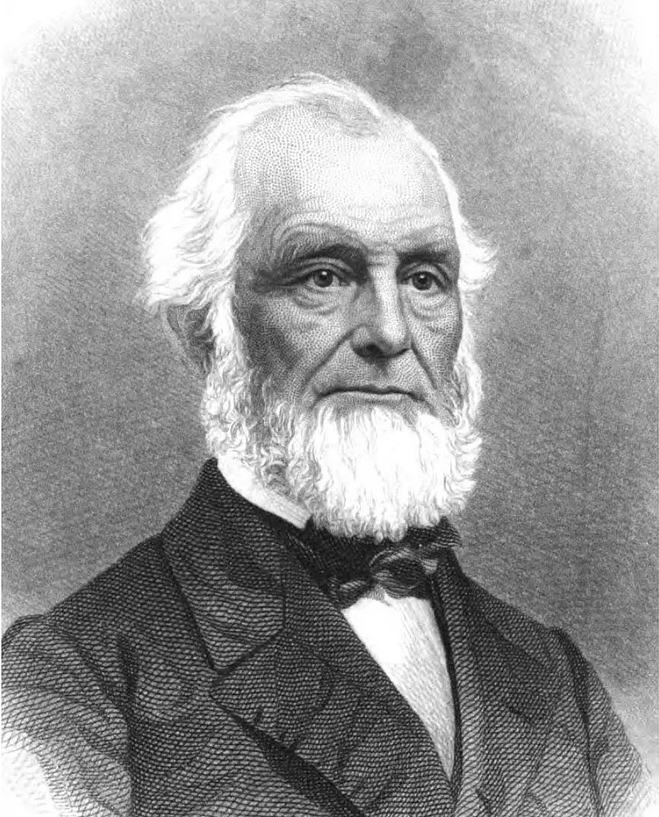
After William Lloyd Garrison was nearly lynched by a pro-slavery mob on the streets of Boston on Oct. 21, 1835, he had an epiphany about the future of the abolitionist movement. As historian Henry Mayer writes in his biography, All on Fire: William Lloyd Garrison and the Abolition of Slavery, Garrison began to pursue political ends through spiritual means, drawing on the egalitarian principles of the American Revolution and fueled by a “militant, messianic Protestantism.”
“Staring into the violent face of the mob in October 1835 made [Garrison] deeply aware of the rawness of American society, and he began to think about pacifism as a rule for living,” Mayer wrote. “If Christians endured barbarous treatment unresistingly, ‘without resorting to either their physical energies or to the force of human law, for restitution or punishment,’ would this exert a transforming influence upon the world?”
As a pacifist and a member of Mainer William Ladd’s American Peace Society (see Radical Mainers, April 2025), Garrison railed against Christians who opposed war but accepted the violent authority of the slave master. He believed all Christians should embrace both pacifism and abolitionism.
Mayer describes Garrison’s views as a form of Christian anarchism, in that he believed “if human beings were to live by Christ’s axioms alone and ‘render unto God the things that are God’s,’ they would not need a Caesar to rule over them.” Garrison’s “perfectionism,” as the philosophy was known, presented a utopian view that humans could replace worldly governments with a society ruled by Christian love and morality — the Lord’s kingdom on earth.
This Quaker-influenced belief prioritized the spirit of the Lord within oneself over religious laws, clerical authority and the literal interpretation of the Bible. Perfectionism was thus branded as antinomian heresy by the Protestant establishment and put Garrison at odds with conservative church leaders. Rev. Lyman Beecher blasted the perfectionists for thinking “they do God service by butting every thing in the line of their march which does not fall in or get out of the way.”
Garrison fired back that Beecher was aligning himself with the South, “selling indulgences” for sin and “lulling consciences” of the people. He called on churches to either sever ties with “traffickers of souls” or be regarded as infidels.
Garrison also hammered Beecher for denouncing working-class people who labored on the Sabbath to earn a living while siding with “the profane, the oppressive, [and] the aristocratical” elements of society. Due to Beecher’s influence, every church in Boston banned the Massachusetts Anti-Slavery Society from holding meetings on their properties. Mayer noted that local abolitionists were forced to gather instead inside an old horse barn in 1836.
Rev. Asa Cummings of Portland, the conservative editor of the Christian Mirror, tried to tie Maine’s anti-slavery ministers to Garrison’s controversial beliefs in an attempt to discredit the movement. But the clergy-dominated Maine abolitionist community generally stayed neutral in the debate.
In July of 1837, the Winthrop Anti-Slavery Society responded to the controversy with a resolution declaring its “undiminished confidence” in the rectitude of Garrison’s principles and his “unflinching integrity.” However, the resolution did criticize Garrison for picking a fight with the clergy and “dip[ping] his pen in gall when speaking of individuals.” The Winthrop abolitionists also disagreed with Garrison’s attempt to inject his radical religious views into the abolitionist cause.
In an accompanying letter to Rev. Cummings, Rev. David Thurston of Winthrop, an organizer with the Maine Anti-Slavery Society, argued that while he believed Garrison had written some things that were counterproductive to the cause, “both sides” were too quick to denounce one another. Besides, he argued, one man shouldn’t be seen as representative of the entire movement. In reply, Cummings lamented that the Maine abolitionists would not “cut loose from so malignant and dangerous a leader as Mr. Garrison” and warned of “consequences” if they refused to denounce him.
Rev. Austin Willey, who later ran the Maine Anti-Slavery Society’s newspaper, the Advocate of Freedom, expressed frustration that Cummings linked Maine abolitionists with Garrison’s radicalism. Doing so made moderates think Garrison was a troublemaker and led anti-slavery activists to assume orthodox religion supported human bondage, Willey argued.
But other Mainers were firmly in Garrison’s camp. Portland printer and newspaper editor Daniel Clement Colesworthy, who ran a bookstore on Exchange Street, wrote a letter to the Liberator in October of 1837 stating “there is at least one abolitionist in this city, who refuses to bow his knee to an unfaithful priesthood, and who remains a faithful follower of Garrison.”
Colesworthy identified with Garrison’s struggles with the clergy, having himself been ousted from a local church because his views “did not coincide with the views of a few bigoted, narrow-contracted, oppression-loving few.” He said he was also fired as a Sabbath school teacher because the church was “unwilling to have a polluted abolitionist, and a reprover of gambling and intemperance, share with them the honor of instructing the rising generation in the truths of revelation.”
“Go on, go on, dear Garrison,” urged Colesworthy. “I, for one, humble though I be, will never quit you. Wherever my lot is cast in life, I shall be an abolitionist — a gospel abolitionist — a Garrison abolitionist, in every sense of the term.”
Meanwhile, an even more controversial matter was dividing abolitionists in the mid-1830s: whether women should be allowed to participate equally with men in the movement.
When the American Anti-Slavery Society was founded in 1833, women were not granted voting rights or delegate status, relegating them to be observers at meetings. They were encouraged instead to form their own auxiliaries, through which they fundraised for the cause and collected signatures for anti-slavery petitions.
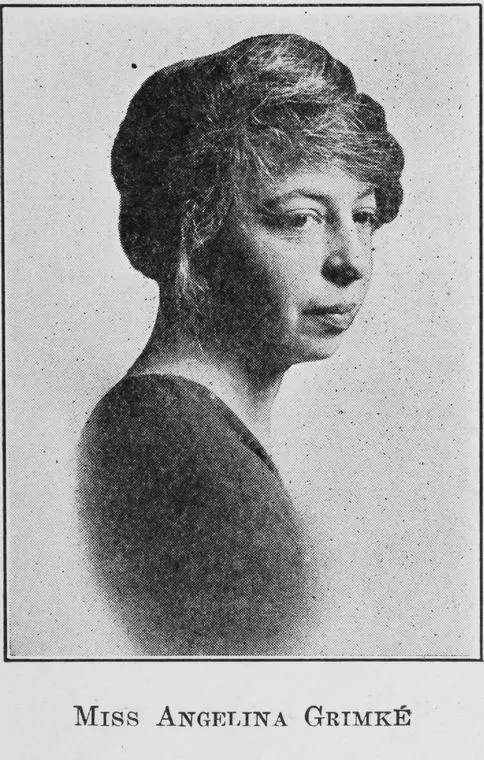
Then Quaker abolitionist sisters Sarah and Angelina Grimké began drawing huge crowds eager to hear them speak about the horrors of slavery they’d witnessed growing up on a South Carolina plantation. As Angelina observed, “Men came in their shirtsleeves directly from the fields and workshops and women flocked to the talks, many carrying children in their arms.”
Very few women had ever delivered public lectures before mixed, “promiscuous” audiences of men and women in the U.S., and the sisters’ tours drew thousands of people across New England. The conservative, all-male clergy were appalled that these radical women were breaking such deeply held taboos and banned them from speaking in their churches. In June of 1837, the Congregational General Association of Massachusetts issued a pastoral letter regarding the “woman question,” to be read in Congregational churches. The ministers argued that the “appropriate duties and influence of woman are clearly stated in the New Testament,” and females should focus on their “unostentatious prayers” to advance religion in the home.
Garrison, who helped propel Angelina Grimké to fame by publishing a letter she wrote in the Liberator in 1835, condemned the pastoral letter as “popery.” Sarah Grimké chastised the clergy for usurping the authority of God in an attempt “to crush the immortal mind of woman,” and argued that God made no such distinction between the sexes. The incendiary battle of words continued throughout the summer of 1837, with the clergy denouncing the Garrisonians as “idolators” of a false prophet, while Garrison vowed to dismantle “the crazy superstructure … [of] man-enslaving religion.”
The Grimké sisters inspired a generation of young women to join the cause. In 1837, abolitionist luminaries including Lucretia Mott and Lydia Maria Child joined the Grimké sisters and women from 10 states, including a handful of Black women, at the first Anti-Slavery Convention of American Women, in New York City. Many attendees at this unprecedented gathering went on to become leaders of the fight for women’s suffrage.
At their second convention, held in Philadelphia in 1838, a pro-slavery mob was so infuriated by the sight of white women and Black men in attendance freely mingling that they burned down the venue, Pennsylvania Hall.
Abby Kelley of Lynn, Massachusetts, who became known as “Jezebel” to her critics, worked closely with Garrison. The two activists shared “ultra” abolitionist beliefs in racial equality, pacifism and women’s rights. With the encouragement of Angelina Grimké, Kelley served as the Lynn Female Society’s first delegate to the national convention of the American Anti-Slavery Society in New York. Despite loud protests, she began speaking in front of mixed-gender audiences in 1838.
Rev. Willey believed the “woman question” was “disastrous” for the abolitionist movement, “whatever its merits.” He wrote that public opinion was strongly against gender equality and called Garrison’s political views “anarchy.” These divisions, he argued, were only playing into the hands of the slave power.
In February 1839, the Maine Anti-Slavery Society passed a resolution opposing the inclusion of women as equal members. The men believed gender equality “creates discord” and distracted from the purpose of the abolitionist movement. At the American Anti-Slavery Society meeting held in New York City in June of that year, six of Maine’s seven delegates voted against allowing women to serve among them. The lone dissenter was also the lone Black delegate from Maine, Charles L. Remond.
The conservatives knew that if women gained an equal foothold with men in the movement, it wouldn’t be long before they started demanding other rights. And they were right.
Nine years later, abolitionist women gathered at Seneca Falls, New York for the first women’s rights convention. By the late 1850s, Maine women had joined the fight for women’s suffrage.
Andy O’Brien is communications director for the Maine AFL-CIO. He also writes on Substack, and maintains the website Maine Working-Class History, with Will Chapman.