Ron Currie’s New Novel Reimagines the 1987 IP Strike with Gangsters
On June 16, 1987, a global corporation provoked 1,250 workers at the International Paper (IP) mill in Jay, Maine to walk off the job to protest company demands for major concessions. For sixteen months, the members of United Paperworkers International Union (UPIU) Local 14 were locked out as the company deployed an army of scabs to take their jobs, thus ripping the community apart. The bitterest strike in Maine history officially ended Oct. 11, 1988, when the international union pulled its support for Local 14, leaving a town deeply divided to this day.
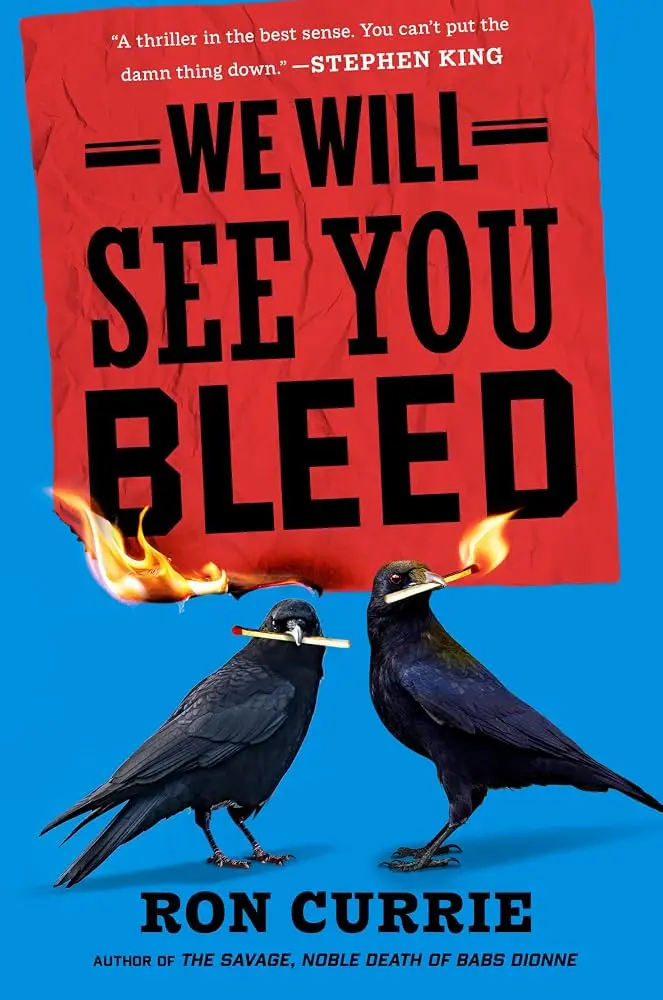
Portland author Ron Currie’s latest novel, We Will See You Bleed, reimagines the historic strike as an action led by the ruthless gangster mèmère Babs Dionne. In The Savage, Noble Death of Babs Dionne, the first book in the Babs trilogy, Currie introduced the title character as a brash, sharp-witted businesswoman, doting grandmother, and cold-blooded drug kingpin of present-day Waterville’s “Little Canada.” Babs controls the flow of drugs into the city’s Franco-American neighborhood, aided by a tight group of sexagenarian female lieutenants.
Currie’s sequel explains why Babs entered a life of crime, transposing the strike from Jay in 1987 to Waterville in the late summer of 1984. Unlike the leaders of the Jay strike, Local 116 President Babs Dionne is not above breaking some laws and busting some heads to take care of her fellow working-class Francos.
At first, Babs and her strapping husband Rheal tried to play by the rules and earned an honest living doing grueling work at the sweltering Hollingsworth & Whitney paper mill. When the company gave them an unacceptable contract proposal, the workers rejected it and went on strike to fight for a better deal. But, writes Currie, “the Mill was God. And like God it sometimes grew angry, turned deaf to prayer, demanded blood sacrifices.”
We Will See You Bleed is full of unforgettable characters: Franco-American gangsters, crooked cops, mystical street drunks and ice-cold corporate executives. In the first book, Rheal is only a memory, but here he comes to life as the ying to Babs’ yang. She’s impulsive and quick to ignite; he’s laidback and good-humored, often stopping his wife from giving in to her most violent, destructive urges. Rheal wears “the world and everything in it so lightly despite experiencing darkness” during two tours as a Marine infantryman in Vietnam. But he’s also a merciless enforcer when he has to be, like when he’s running rival drug dealers out of Little Canada.
Just like the real-life IP executives, Currie’s fictional IP vice president, Clay Sutton, never planned to bargain with the workers in good faith. After complaining about his labor problems to President Ronald Reagan during a fundraiser, the Gipper gives him an idea: Why not just fire them like he fired the striking air traffic controllers three years earlier?
Waterville Police Chief Roy Davies was “disdainful of the genteel power Sutton wielded,” but “only until that power was dangled in front of him.” With the help of Davies and the notorious Lewiston gangster Harold Aucoin, Sutton turns his “PR headache” into a victory. After his hired goons turn a protest march into a violent spectacle, the strike ends and the strikers are replaced with a malleable scab workforce. Although the strike is broken, Babs tells her union brothers and sisters she has a plan to keep fighting the company. But she won’t promise she’ll do it “the right way.”
We Will See You Bleed becomes a thrilling ride as Babs, Rheal, a cadre of tough Franco women and two hired bruisers known the Saucier Brothers take over the local drug trade to finance a mutual aid network for laid-off workers’ families, and kidnap and torture scabs in an effort to drive them out of town. After a year of “suffering, families broken like cheap plastic toys and friendships turned to dust,” Babs realizes Wall Street has broken the decades-long peace treaty between labor and capitalists, but nobody bothered to tell the workers.
“We’ve been playing by the old rules as if they still apply – march around and sing songs and hold the line and sooner or later they’ll have to give us our fair share,” Babs says. “But that’s not happening.”
Now it’s time to do things her way.
We Will See You Bleed is now available at local bookstores.