Maine’s First Abolitionist Newspaper Challenged Slavery’s Local Apologists
On May 14, 1838, a pro-slavery mob burned Pennsylvania Hall to the ground, just four days after it was completed. The great hall in Philadelphia was the first building in the nation constructed specifically as a meeting space for abolitionists. Slavery’s foes were already reeling from the murder of Maine-born abolitionist newspaper editor Elijah P. Lovejoy six months earlier in Alton, Illinois [see Radical Mainers, June-Aug. 2022]. Slavery’s defenders were destroying printing presses and mobbing pro-freedom gatherings around the country, posing the strongest challenge yet to the First Amendment of the young republic’s Constitution.
Amid those widespread attacks on free speech, the grand, four-story Pennsylvania Hall stood defiantly as a “Temple of Free Discussion,” where controversial issues like slavery, women’s rights and temperance could be openly and peaceably debated. Its location was chosen because of its proximity to Independence Hall, where the Constitution and the Declaration of Independence were signed, enshrining the principles of liberty, equality, freedom of expression and a free press in the nation’s founding documents.
Abolitionists cherished these revolutionary ideals and fought to compel the nation to live up to them. Pennsylvania Hall contained an abolitionist reading room and bookstore, a lecture room, the office of the Pennsylvania Anti-Slavery Society, and space dedicated to selling goods produced by free labor. The auditorium on its second floor could accommodate 3,000 people. Its basement was intended to be the headquarters of the Society’s abolitionist newspaper, the National Enquirer and General Register, later known as the Pennsylvania Freeman.
It was the sight of women and men, Black and white, publicly mixing in the spirit of equality that infuriated the estimated 10,000 rioters who destroyed Pennsylvania Hall. Abolitionist women like Maria Weston Chapman, Angelina Grimké Weld and Abby Kelley Foster had risen to great prominence in the movement through the power of their voices — much to the chagrin of the conservative clergy — and were gathering at the hall for the second Anti-Slavery Convention of American Women.
Leaflets circulated in surrounding neighborhoods called for citizens to “interfere, forcibly if they must” in the convention’s proceedings. Ignoring the mayor’s pleas to disburse, the mob smashed windows, ransacked the building and then set it ablaze as firemen and policemen stood by watching. Firefighters sprayed neighboring structures that caught fire, but refused to extinguish the flames engulfing the great hall. Unsated by their destruction and unhindered by authorities, rioters then marched down the street to attack the Quaker-run Shelter for Colored Orphans.
Ten days later, the Portland-based Christian Mirror — a Congregationalist newspaper and official organ of the Maine Missionary Society — spread a malicious rumor to justify the attack. Pennsylvania was the first state to legalize interracial marriage, in 1780, but “race mixing” was still a major taboo in white society.
Mirror editor Asa Cummings argued that the “mob could not bear to see black and white promenading together – a black woman handing on a white man’s arm, and a black man gallanting a white woman.” He added that “men and women in our country cannot be allowed to indulge their own preferences, or gratify their own tastes with impunity.”
Maine’s political newspapers of this period rarely raised the issue of slavery to avoid dividing voters within their parties. But in the spring of 1838, a new media voice emerged in Brunswick called the Advocate of Freedom, the official newspaper of the Maine Anti-Slavery Society. On June 7, a letter in the Advocate took Cummings to task for spreading such a “shameful” and “criminal” rumor of race-mixing.
“Surely the editor of the Mirror cannot be indifferent to the truth even in relation to abolitionists,” the letter-writer, identified as J.N., wrote. “Mr. Cummings has a right unquestionably to vindicate slavery, and of course to oppose every effort for terminating its existence, but then I think his readers would prefer this should be done only by truth and fair argument.”
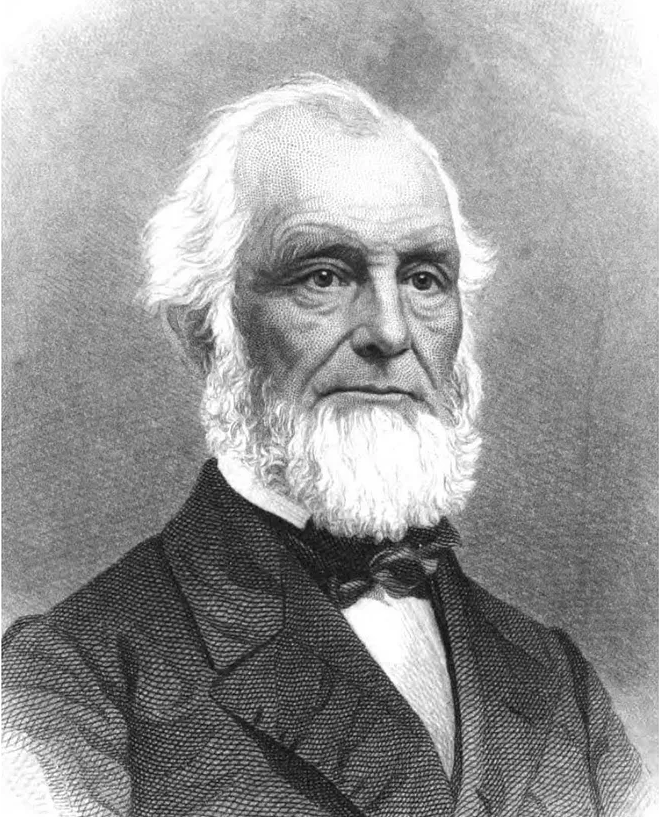
In a May 24 editorial, Advocate editor William Smyth, a mathematics professor at Bowdoin College, wrote that the conflagration in Philadelphia had shown the nation the “utter incompatibility of southern slavery with the existence of liberty in the nominally free states.”
“Our own inalienable rights,” Smyth wrote, would not be secured until slavery is destroyed. “The question in fact is every day becoming more distinctly placed before this whole community, whether they will join in the effort to destroy slavery or tamely bow down before the bloody wheels of this American Juggernaut and be destroyed themselves,” he observed. “Freemen of Maine, which side of the alternative will you take?”
Smyth was one of the founders the Maine Anti-Slavery Society and served on the Board of Managers for the American Anti-Slavery Society. A devout Christian, he was known for sheltering asylum seekers on the Underground Railroad. He was also a friend of famed novelist Harriet Beecher Stowe, author of Uncle Tom’s Cabin.
Smyth launched the Advocate of Freedom on March 8, 1838 with a circulation of 1,500 papers, including 1,300 subscribers. In his first editorial, he announced the Advocate would spread anti-slavery principles to influence the public dialogue, serve as a clearinghouse for the proceedings of state, county and municipal anti-slavery society meetings, and be an organizing tool to bring together abolitionists from across our vast rural state.
Smyth noted that while there were some diehard abolitionists in Maine, most Mainers were not “yet awakened to the great subject.” Other anti-slavery newspapers, like New Hampshire’s Herald of Freedom and the Philanthropist in Ohio, were likely the reason the abolitionist movement in those states had advanced much further than in Maine, he suggested.
“We cannot admit that the soil of New Hampshire is better adapted to the growth of Anti-Slavery principles than that of Maine. But she has had her Herald of Freedom to proclaim the glad truths of abolition,” Smyth wrote. “Its trumpet tones have aroused her hardy sons, and they have come up to the work in numbers and with an energy that reproves our faltering pace and tardy footsteps.”
The editor acknowledged that Maine’s maritime economy depended on maintaining good relations with Southern planters, so calling for an end to the South’s system of production wasn’t terribly popular here. But the Advocate was unapologetically radical. Smyth wrote that the paper sought to “unite the efforts of the philanthropist, the patriot, and the Christian” to advance the cause of “universal freedom” for “the oppressed millions in our land.”
During its three-year run, the Advocate published incendiary debates between Maine abolitionists, Southern slaveholders and the conservative Maine clergy. It printed the stories of local self-emancipated former slaves as well as those of Mainers who moved south, “drank in the moral atmosphere of slavery” and became slaveholders themselves. The Advocate was decidedly non-sectarian, yet deeply religious, and it frequently invoked scripture to argue that slavery was a mortal sin.
“We believe in God’s moral government; that he rewards righteousness and punishes sin,” Smyth wrote. “We shall avail ourselves of this belief [that] we have no idea that the man who spends his days in crushing his brethren into the dust will go unpunished.”
The Advocate railed against the hypocrisy of Maine Congregationalist clergy who defended the rights of Southern whites to enslave African Americans while simultaneously condemning slavery as a sin. It blasted clergymen from New England who moved to the South and became some of slavery’s biggest apologists. In response to those criticisms, one Advocate correspondent called for New England’s colleges and theological seminaries to be “thoroughly purged of the deadly leaven of pro-slavery.”
The Advocate also provided updates on anti-slavery movements in other parts of the world. It crusaded against the extermination and expulsion of indigenous people from their lands to make way for slave-picked cotton and other commodity crops. The paper printed gruesome articles about the abuse of enslaved people, the mass deaths of African American colonists in Liberia, and slave auctions in the nation’s capital. And the Advocate promoted Maine-made maple “Anti-Slavery” sugar as a “far superior” sweetener to slave-produced cane.
The newspaper occasionally overestimated the strength of the abolitionist movement’s influence. In a letter dated May 14, 1839, an Arkansas resident claimed the movement was growing in the South. “There is more feeling in the minds of many of the slaveholders than you would imagine,” this letter writer naively claimed. “They admit that slavery is wrong, and I doubt not, if they saw the way open, they would cheerfully emancipate their slaves.”
Sometimes the Advocate printed letters from its critics to spark debate. A Brunswick letter writer named B.M. complained in August of 1839 that the paper was too “one-sided” and didn’t provide enough space for pro-slavery voices. B.M. scolded the Advocate for promoting abolitionist Theodore Weld’s book, American Slavery As It Is: Testimony of a Thousand Witnesses. The book’s graphic descriptions of violence and immiseration painted an “unnatural distorted view of slavery” in order to evoke a “feverish, sick sympathy,” B.M. wrote. The writer denied being an apologist for slavery, but argued such shocking descriptions would only alienate their Southern Christian brethren.
“We cannot stand as moral censors here at the North, in the capacity of fellow Christians even, and decry the sin of slavery and the institutions of the South — a people differing so widely from us in their civil and social condition and their local and constitutional character,” B.M. wrote.
Smyth responded in print that Weld’s book excited not “feverish, sick sympathy,” but “a noble, generous, healthful indignation” against the institution of slavery. In a later issue, Smyth mocked the moderate scolds who felt the Advocate was too biased and extreme. He suggested the paper could run some “pro-slavery poetry.”
“Our ‘poet’s corner’ has hitherto been all of one side, insomuch that it has become quite a vulgar prejudice that the muses are always in favor of liberty,” Smyth snarkily wrote in an editorial published Sept. 14, 1839.
“Another very urgent want, at this time, is a pro-slavery prayer,” he continued. “The publications of the Peace Society always dwell on the absurdity and inconsistency of both parties praying for the success of their armies but what would they think if all the praying was on one side?”
Andy O’Brien is communications director for the Maine AFL-CIO. He also writes on Substack, and maintains the website Maine Working-Class History, with Will Chapman.