Solidarity empowers Portland Museum of Art workers to break through the infamous “white wall”
In September of 2018, The Bollard published an exposé about working conditions at the Portland Museum of Art. Titled, “The (Maine) Potato Eaters,” after the famous Van Gogh painting, it told the story of “visitor experience team leader” Tanner Skilton’s struggles with museum management’s employment policies — including low pay and lack of job security — and its response to anti-gay harassment he was subjected to on the job.
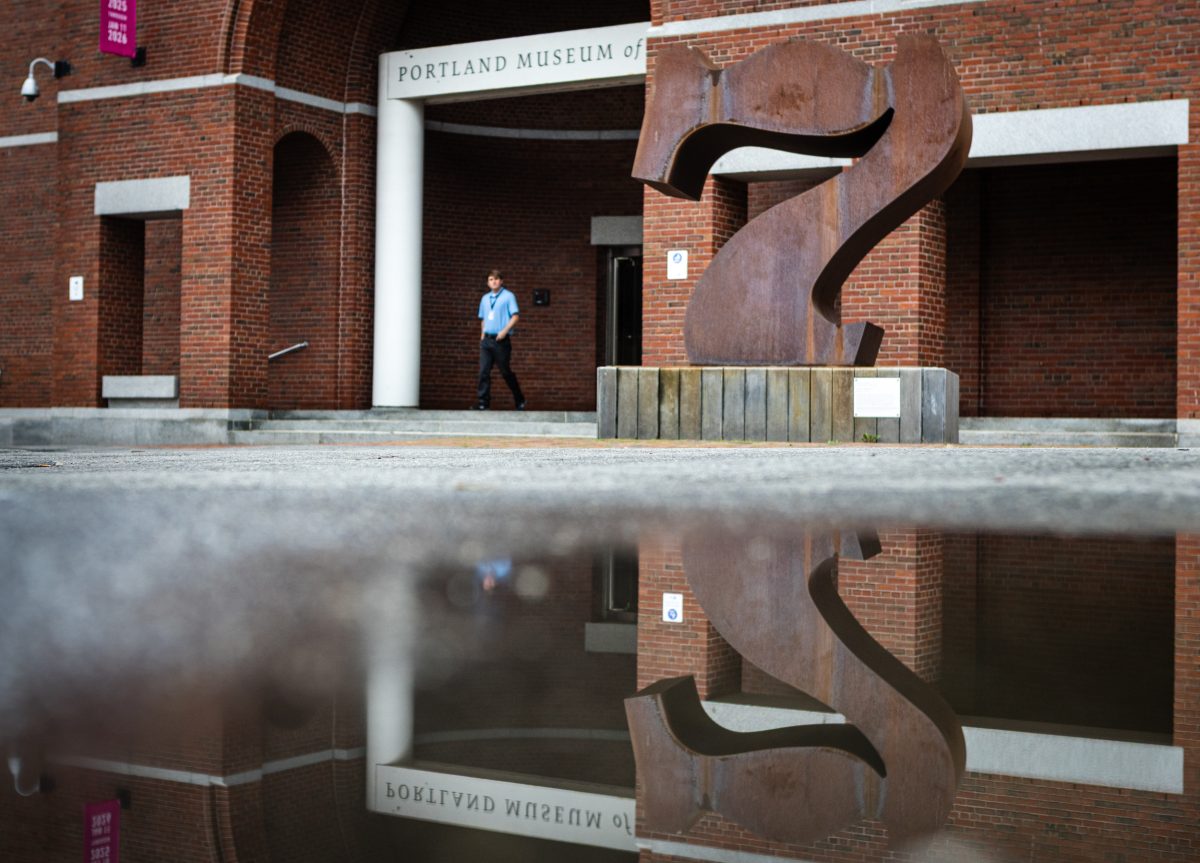
The divide between workers and management at the PMA was exemplified by the so-called white wall — the tall partition that separates the galleries and other public areas from administrative offices in the back of the iconic Payson Building. “[T]he departments that were treated poorly would be Visitor Experience, Security and Facilities,” Skilton said back then. “If you were behind the ‘white wall’ in the Payson Building, you made more money, you got all of the extra holidays, and you weren’t just treated like the scum of the earth.”
Skilton added that security guards, in particular, were treated very poorly by management, and he revealed cutthroat, corporate-world practices like firing all the non-supervisory Visitor Experience staff at Christmastime, then inviting them to re-apply for about half as many “new” positions.
In the spring of 2020, citing concerns that echoed Skilton’s, PMA workers decided to organize, and in early 2021, about 60 employees voted to join the New York-based United Auto Workers Local 2110, an amalgamated union representing roughly 3,000 white-collar workers with 30 contracts at universities, publishing houses, law firms and museums, including the Museum of Modern Art.
Administrators behind the white wall sought to undermine the workers’ solidarity using two typical management tactics: job cuts and bureaucratic roadblocks.
After those votes to join UAW Local 2110 were cast, but before they were counted, museum management eliminated over 15 part-time ambassador positions, some of which paid as little as $14 an hour. They then replaced those jobs with five full-time positions, with benefits, for which the fired workers were welcome to apply.
“The union described the move as an unfair labor practice by eliminating positions that would have been part of the bargaining unit, and accused the museum of acting with unnecessary aggression and union-busting tactics,” the Portland Press Herald reported at the time.
PMA management also argued that 23 of its “gallery ambassadors” were technically performing the work of security guards, albeit in a less “authoritative” manner and style of dress, and therefore not eligible to join UAW Local 2110. In April of 2021, the National Labor Relations Board (NLRB) agreed with management — reversing an earlier ruling at the regional level — and ultimately only about 35 workers were able to unionize.
After the ruling, negotiations to hammer out the first union agreement in the museum’s then nearly 140-year history began. The contract, ratified in November 2021, covered about half the staff, including full-time, part-time and on-call positions. It secured several significant gains for workers, including higher minimum salary grades, 2 percent raises in each of the following years, increased employer contributions to healthcare costs and six weeks of paid parental leave. Employees with at least eight years of service could also get five weeks of paid vacation per year.
Meanwhile, Local 2110 filed an unfair-labor-practices complaint with the NLRB over the fired ambassadors. That complaint was settled in March of 2022, when the museum agreed to pay 13 fired employees $2,000 each; one received $30,000.
Two years later, in January 2024, the remaining museum ambassadors joined the International Union, Security, Police and Fire Professionals of America (SPFPA Local 647) by a vote of 11-7, then got to work on a contract of their own.
Once again, management slashed jobs. Citing a 35 percent decline in visitors and other pandemic-induced financial pressures, the PMA eliminated 13 more positions in February 2024, including 11 members of Local 2110, its unit chairperson among them.
The Press Herald reported that PMA director Mark Bessire, who was publicly accosted by an artist inside the museum in 2021 for his alleged anti-unionism, voluntarily took a 20 percent cut in his $440,000 salary during this time, but the article also noted that the PMA was marshaling funds for a major expansion into the former Children’s Museum of Maine next door, which it bought in late 2019 for $2.1 million.
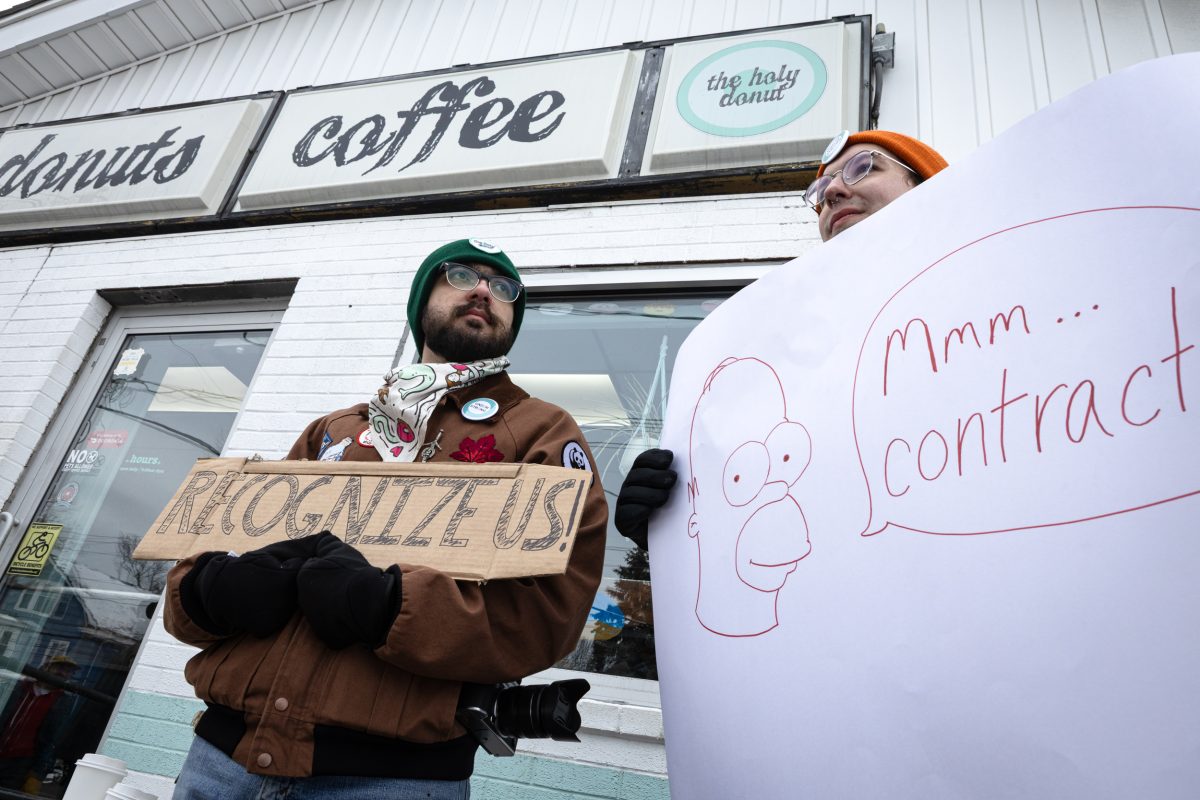
Wary though undaunted, the remaining Local 2110 members began bargaining their second contract with management, an effort that included occasional leafleting outside the museum. “It was definitely challenging for everybody,” said Julie Warchol, associate museum registrar and Local 2110 union bargaining committee member. “It was challenging for the folks who were laid off, and it was challenging for those of us who remained.”
Those negotiations produced another three-year contract, ratified last fall, that contained more big wins, including raising the minimum salary band from $40,000 to $50,000 by the end of the contract. All union members got an immediate 8 percent pay bump and an additional 2 percent raise guaranteed each year.
“We also got increases to our retirement and [employer-provided] health insurance contributions,” said Lorna Stephens, a PMA production manager, member of the bargaining committee and current Local 2110 unit chair. “It felt like a really good win for us. And we were able to secure a continuation that premiums would not increase for staff members across the life of the contract.”
Perhaps the two unions’ biggest win was something less tangible: respect. “Our ability to work effectively with management is a direct benefit of organizing as a group,” said Stephens.
Museum ambassadors affiliated with SPFPA Local 647, which is based in New Hampshire, won their first three-year contract in August of last year. That agreement included an average wage increase of 6 percent for ambassadors in the first year, plus 3 percent raises each year thereafter. It also guarantees at least four weeks off per year.
Roman Gumul, SPFPA’s regional director in New York, was part of the local contract talks and said PMA management proved to be a good negotiating partner this time around. “They didn’t pull any surprise ‘gotchas’ or try to bargain hard, hoping that the union would walk away. None of that,” Gamul said. “It was actually a very amiable negotiation.”
With a couple years of breathing room before contract negotiations begin again, Stephens said things are running smoothly with museum higher-ups. She and Warchol meet with management at least four times per year to discuss topics like the efficacy of performance evaluations and DEI training opportunities.
“We’re really grateful to be working in an environment that has not one, but actually two unionized workforces,” Stephens said. “It feels really empowering.”
Troy R. Bennett contributed reporting for this story.