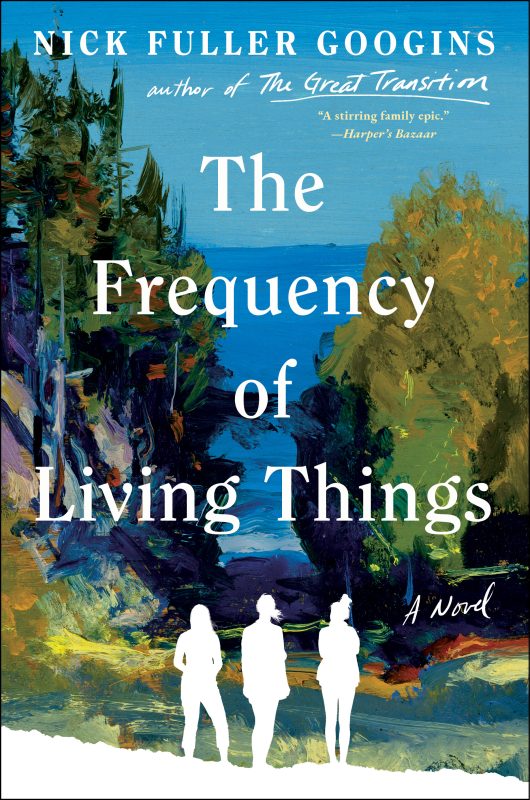
Nick Fuller Googins
Atria Books
Lately, it’s felt to me like Maine fiction’s in a rut, stuck churning out books about failed mill towns, beach reads about bitter ex-wives, and crime novels assembled in the Stephen King factory. So it was with delight that I read Nick Fuller Googins’ riveting second novel, The Frequency of Living Things, a propulsive narrative that reaches into global politics, the music business, the U.S. prison system, dysfunctional family dynamics and drug addiction for its inspiration and material.
Josie is the youngest of three sisters, her elders being musical twins Emma and Ara, all children of a single mom named Bertie. The story begins as Josie sets off on a much-needed vacation to Acadia National Park with her sort-of boyfriend, Dean — a guy who’d “never bring home ribbons for Best Looking,” but “could charm honey from the comb.”
After Acadia, Josie’s plan is to head north to see her sisters play a show. The twins hit the big time two decades prior with their debut album — a gold record, Grammy nods, fans — but failed to make a follow-up. Thus this gig at the Mad Mountain Tavern in Caribou (“Canada practically”), their first live performance in a year.
Although she’s the youngest, Josie’s always taken care of her big sisters: “She covered ninety percent of their rent and one hundred percent of their Netflix and yoga.” So when she gets a call that the Caribou gig’s been rescheduled for that very night — and her sisters need someone to work the merch table — Josie skips the park and comes to the rescue.
The show is a disaster, though the local crowd — mostly drunk, high or both — goes crazy for the twins. Josie suspects Ara has been using opioids again, but the issue just floats, hanging at the edges of their conversations, unconfronted. Emma thinks Ara’s incarceration on drug charges is just the kind of bad-ass street cred their act needs to get back on top.
Meanwhile, Bertie’s mind’s been far away — in the waters off Gaza, to be specific, where she’s preparing to join a “freedom flotilla” delivering aid to besieged Palestinians. A “true believer” in social justice, Bertie nonetheless neglected to believe much in motherhood while the girls were growing up. Josie resents Bertie for neglecting them, while her sisters are more compassionate and forgiving. Their unique story bolster’s Tolstoy’s famous assertion: “All happy families are alike; each unhappy family is unhappy in its own way”
Fuller Googins, an elementary school teacher by day, is a beautifully accomplished wordsmith whose essays and short fiction have appeared in The Paris Review, The Sun and the Los Angeles Times. His first novel was The Great Transition, a climate-crisis story that’s actually optimistic. The Frequency of Living Things, published last year, makes me optimistic about the future of Maine fiction.