Evangelical Abolitionist Agitation in Maine
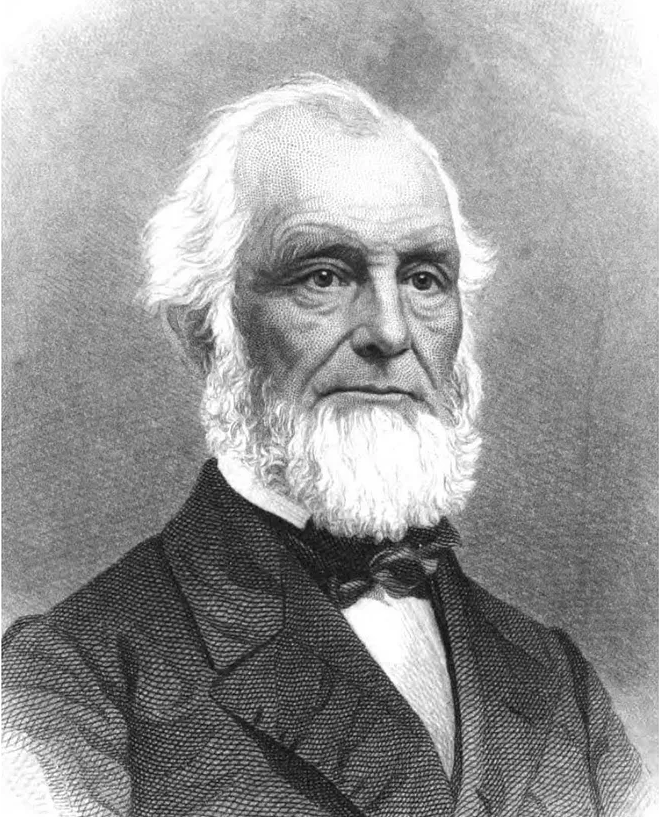
In early 1840, the Rev. Daniel Boody Randall set out for the backcountry towns of Somerset County to spread the fires of abolition. The 33-year-old Methodist minister made his first stop in Anson, a small river town that was once home to the Norridgewock Abenaki. Anson’s population was roughly split between Whigs and Democrats and there was little interest in hearing about divisive topics like abolition. In fact, quite a number of men from the area had moved south and become slaveowners themselves.
“One was now back there who owned twenty slaves, and had just been received into the church!” Rev. Randall wrote disgustedly. “They were among the most respectable citizens. Many slaves were owned in Maine.”
After a couple of meetings in the farming community of Solon, he made his way further up the Kennebec River to Bingham. His lecture there hadn’t been promoted very well and the meetings were sparsely attended. Nevertheless, he managed to sell a few abolitionist books and subscriptions to the Maine Anti-Slavery Society’s new organ, the Advocate of Freedom. Like most abolitionists, Randall was also a staunch temperance advocate and was less than impressed with the number of rum sellers in the town.
Fortunately, when he arrived back in Anson there was a whole neighborhood of Free Will Baptists who regularly read that denomination’s publication, The Morning Star. Previously a Maine-based newspaper, the Star was so radically anti-slavery that the New Hampshire Legislature refused to grant it incorporation in 1834. As activists faced violence in their efforts to desegregate carriages and railway cars in New England in 1841, the Morning Star put out out the extraordinary call to boycott the Eastern Railroad’s Boston-to-Maine line for failing to prevent attacks on Black passengers. Needless to say, the Star’s readers in Anson warmly received Rev. Randall.
“Had religious papers [in] the North taken the same position as that paper, slavery would have been nearly abolished,” the reverend remarked.
Eventually, after traveling another 23 miles west over rough country roads in his horse-drawn buggy, Randall arrived in New Portland, where a large crowd greeted him thanks to the organizing efforts of Rev. John Lennan, a Free Will Baptist minister who traveled 30 miles himself to spread word of the meeting.
“God give them repentance!” Randall exclaimed of his New Portland audience. “A society was formed of fifty members; sold many books, and got ten subscribers. The harvest will be abundant.”
He proceeded to hold another packed meeting in Starks, where he helped organize another Anti-Slavery Society, this one of 80 members, and sold a complete library of abolitionist books for ten dollars. Although the tour of Somerset County had begun a bit disappointingly, by the time Randall made it to Norridgewock, the crowds comprised the largest audiences he had ever spoken before.
“This is the way where the people are unprejudiced,” Randall excitedly wrote.
•••
In those days, the Protestant revival known as the Second Great Awakening inspired millions of evangelical Christians to join the fight for reform causes like abolition and temperance. These radical Christians dominated the Maine Anti-Slavery Society, which is why its founding document is wrapped in religious moralism about the sinfulness of slavery. They were also avowedly anti-Catholic, but Catholics in Maine weren’t too interested in abolition anyway.
In 1839, Pope Gregory XVI issued In supremo apostolatus, a declaration denouncing the slave trade and slavery, but it did not explicitly support immediate emancipation. The Catholic Church was deeply invested in the slave trade. It sold 272 human beings the year before the pope issued his brief in order to save Georgetown University from bankruptcy, according to historian Rachel L. Swarns. Nevertheless, abolitionists used the pope’s position to criticize conservative Protestant church leaders opposed to immediate emancipation.
“Let American Protestantism Blush!” blared a headline in the Hallowell-based Advocate of Freedom. Its editor, Rev. Austin Willey, wrote, “The Pope of Rome — the very ‘Beast’ himself turned protestant, and that too against the enormities tolerated and practiced by American christianity! While christians and christian ministers are apologizing … over this bloody business and toiling to settle with the utmost accuracy all the nice questions of expediency, and inquiring, ‘Will it be judicious?’ ‘Will it not produce excitement and division?’ — the very ‘Mother of Abominations’ comes forth boldly in condemnation of the whole business of slavery. This is done too while catholics are more deeply implicated in the foreign traffic than any other people.”
While Quakers had long been opposed to slavery, Free Will Baptists were the most militant abolitionists of any Protestant denomination in Maine. Not only was the church opposed to slavery, but its ministers and members were actively engaged in the movement to end it.
The church did lose members over its controversial stance, according to Minot native and Free Will Baptist Rev. Silas Curtis. At one of the churches’ annual meetings in Phillips, Curtis observed that “a wealthy influential member and Democrat” immediately withdrew from the congregation after it passed an anti-slavery resolution.
Democratic church members were especially resistant, Curtis recalled, and condemned the abolitionists as “political preachers,” “long-heels” and “nigger-men.” But Free Will Baptist church leaders weren’t in the habit of caving to political pressure. As believers resolved at the Penobscot Freewill Baptist Yearly Meeting in 1837, “slavery is a national sin, and we, as ministers, Christians, philanthropists, and freemen, will use our exertions in every constitutional manner for its immediate abolition.”
At the first meeting of the Freewill Baptist Antislavery Society in Great Falls, N.H., in 1843, Baptists pushed even further by calling for slaveholders to be excluded from Christian fellowship and declaring that true Christians must vote “exclusively for thorough antislavery men.” The Morning Star’s former editor, Rev.John Buzzell of Cape Elizabeth, became disillusioned by the newspaper’s anti-slavery radicalism and launched a paper to counteract its influence, but it didn’t last long.
Abolition was a much more harder sell in other evangelical denominations, like Methodist churches, which had closer connections to slaveholding members in the South. Anti-slavery Methodists like Rev. Randall and fellow Maine Anti-Slavery Society organizer Charles C. Cone, then pastor of the Machias Methodist Church, had to fight for years to get their denomination’s churches to stand against human bondage.
“You know that the arguments of our opponents were brickbats, clubs, and rotten eggs,” Randall recalled four decades later. “I had a little persecution and was kept out of position by the authorities of the Methodist church because I was an abolitionist…”
As noted in last month’s Radical Mainers, the 1835 Methodist General Conference in Bangor rejected abolitionism out of hand. Rev. Cone, who lectured all over Maine for our state’s Anti-Slavery Society, recalled that the Christian Advocate, the official news source of the Methodist Episcopal Church, as well as the bishops and all the chief ministers, were opposed to abolitionism.
In his contribution to Rev. Willey’s book, History of the Anti-Slavery Cause in the State and Nation, Cone noted that at every annual conference the denomination held, a delegation from New York would suppress abolitionist resolutions. “Doctors of Divinity would administer their opiates; and when these failed to effect a cure, the bull of excommunication would show his head, for the church must be saved from the awful results of the fanaticism and madness of abolition,” Cone wrote. “But all their opiates, their threats, and bulls availed nothing. Abolition wouldn’t down, but continued to make ‘alarming’ progress…”
In 1838, Cone and Randall backed the founding of the Conference Antislavery Society to advocate for the cause within the Methodists’ General Conference. The conservative Conference leadership grew so alarmed by the insurgent caucus that it appointed Hallowell preacher and abolitionist Gershom F. Cox to head up a committee charged with shutting down debate on the issue. (Cox later edited what became the long-running Methodist newspaper, Zion’s Herald, the only Northern Methodist paper that did not condemn slavery.) Two-thirds of the conference voted to ban debate, causing many abolitionists to abandon the effort, believing their church was “lost to the slave power.” Cone was even removed from his ministry for his abolitionist activities, though his church petitioned for his return.
In 1839, Cone and Randall led another insurgency at the denomination’s Maine Conference, and this time they successfully elected an entire delegation of abolitionists to the General Conference in Baltimore in 1840. A few months after Randall made his sojourn into Somerset County, he joined four other Maine Methodists for the big showdown in Baltimore.
Slavery was discussed at the General Conference, but a committee assembled to consider anti-slavery petitions determined they were “the result of agitation, and not of original dissatisfaction on the part of most of the persons signing those petitions,” because committee members believed the signatures had been “obtained by a concerted operation, under the direction of some single intellect.” Conference attendees ultimately opted to reject the petitions.
Adding insult to injury, Methodists gathered in Baltimore even voted to reject the testimony of Black pastors on the subject. Shortly after the gathering, a group of abolitionists formed the National Antislavery Convention of Methodists to continue the fight. Within a few years, the slavery debate split the Methodist Church into Northern and Southern factions.
Traditional Baptists were also active in anti-slavery agitation, especially in abolitionist hotbeds like Kennebec County. Professor Calvin Newton of Waterville College (now Colby, which was founded as a Baptist institution) was an executive committee member of the Maine Anti-Slavery Society. At Baptist county conventions from Portland, Bath and Bowdoinham to Sidney, Etna and Cherryfield, Baptists condemned slavery, and some called for immediate emancipation.
But there were also many conservative Baptists, like Rev. Adam Wilson, editor of the Portland-based Zion’s Advocate, who strongly opposed abolition. Still, of the 200 Baptist ministers in Maine in 1841, 180 were claimed to be “decided abolitionists,” according to historian Henry Burrage.
Baptist congregations in Maine were generally more divided on the slavery issue than their clergy, wrote Baptist Rev. Joseph Ricker. And he would know, having ministered to the First Baptist Church in Augusta, which split into two rival churches after Black parishioner John Carter’s effort to ban slaveholders from taking communion [see Radical Mainers, June 2024].
“Unseemly words were spoken, harsh epithets bandied and chief friends separated,” wrote Ricker. “In place of harmony was discord, in place of love, alienation if not hatred. Churches not a few were rent in twain, and if by some favoring providence other churches were not thus torn and distracted, the sweet fellowship of former years was sadly marred.”
Andy O’Brien is a writer and communications director for the Maine AFL-CIO. You can reach him at andy@maineworkingclasshistory.com.