photo/Kiki Garfield
After decades of derring-do, detours and dead ends, Maine writer Elizabeth Peavey continues to go her own way
As I approach the Cumberland County Courthouse I spot a parking space but keep going. Not because it’s too small, but because it’s metered. You see, Elizabeth Peavey does not pay for parking in Portland.
That’s a pretty fancy attitude for someone who’s just driven a half hour into the city from the Maine woods, feeling like Ma Ingalls on her buckboard making her monthly trip to the mercantile for a sack of flour and a bolt of gingham. But despite the fact I’ve been on an extended sabbatical from civilization, Portland is still my town.
I moved there in 1979, when dinosaurs roamed the proms instead of food trucks. I grew up in Bath, where Portland was regarded as “the city,” but to a young dreamer like me, Portland was a two-bit town in a hick state, a way station until I could get my real life going, somewhere Out There. I couldn’t wait to get as far away as fast as I could. And I tried. Lord, how I tried.
The desire for flight started in childhood. My early modes of transport were modest: pumping my spindly legs to soar into the sky on a swing; furiously peddling my trike to the end of the driveway; paddling in the coves and inlets of the New Meadows River, testing how far out I could swim before I heard, “Elizabeth Ann, not so deep!”
Then came the bikes. No helmets, no phones, no way for parents to know where my gang and I were – just the open road and freedom. Once I got my driver’s license I swooped around the backroads of Bath in my father’s 1969 Delta 88, top down, music blaring, hair and eyes streaming. The pines were so thick they created a tunnel under the blue evening light, making me feel like I was entering another galaxy: a voyager fixed on her solo mission.
A backpacking trip in the Rockies when I was 17, plus a crush on John Denver, inspired me to apply to only one college: the University of Denver. I was accepted, but when the money part didn’t work out I got railroaded into attending the University of Maine at Orono — “U.M. Zero,” as it was called. I was miserable, but I escaped by reading books like On the Road and Even Cowgirls Get the Blues, hitchhiking up and down Route 1, going nowhere — just going. After three semesters, I made a break for it. And that’s how I landed in Portland.
My plan was to live in a turret and write poetry, but because my parents were funding my folly, I transferred to the University of Southern Maine. I felt restless almost as soon as I arrived. Fortunately, I was recruited for the school’s public speaking team my first semester, which meant frequent travel along the Eastern Seaboard and beyond. When I got bored with my studies, a semester in London was arranged. When that term ended I returned to USM rolling my own cigarettes, speaking with a slight British accent and sporting a red beret purchased in Paris. (Yes, I was as insufferable as that sounds.)

The following spring I returned to London, having been cast in the first USM show to tour England, The Great American Mail Order Catalogue, a rather pointless montage of Americana-esque musical numbers and vignettes that included a tribute to blue jeans during which we shouted 1970’s designer brand names (“Sasson!”) and slapped our butts. For some reason, the Brits ate it up.
When the tour concluded I backpacked through Europe until my money ran out and landed, once again, in Portland. A year later I climbed into my trusty rusty Subaru and spent four months aimlessly driving across the U.S. and Canada. After a monthlong couch surf in San Francisco, money gone and welcome worn out, I retreated to Portland once again, but after the death of my beloved dad, when I was 25, I returned to San Francisco for two years, followed by a stint in Boston. I was convinced I was going to be “discovered” (for what, was unclear) in one of those cities, but instead they just kicked my ass.
Finally, at 30, I dragged myself home to Portland for good. It turned out my two-bit town didn’t look so bad after all.
•••
It has to be the hottest day of the year. My sunroof acts as a magnifying glass, trying to laser off the top of my head. Still, I continue to circle the block, passing by another, then another open parking space, as well as the parking garage – right across from the courthouse. I scream in my head, Why can’t you be like a normal person and just park, you idiot? Yet I keep cruising.
•••
It was upon my return to Portland in 1990, after years of odd jobs and restaurant work to support my writing habit, that I started my career. I was invited to fill in for one semester teaching public speaking at USM. That gig lasted more than 20 years. And I got my first assignment for Down East magazine, where my essays and articles appeared for over two decades.
But the turning point in my Portland life was when I was hired to be the arts editor at the now-defunct Casco Bay Weekly. It was the only “real” job of my professional life, and I lasted all of 18 months.

It was my responsibility to cover the scene, which to my mind meant placing myself in the middle of it. I was out every night, swooping from The Top of the East to the bowels of Geno’s on Brown Street, from fancy galas to skuzzy garage-band shows. There were art openings, theater productions, and so much music to write about. Plus the parties: swank receptions at beloved gallery owner June Fitzpatrick’s rowhouse and after-hours gatherings that rocked into daylight on the rickety porch of some musician’s walkup.
Every Wednesday night after deadline, the CBW staff gathered in the front window of Gritty’s (and later at the Free Street Taverna) — a sort of Aucocisco Round Table with yours truly holding court as the group’s rapier-tongued Dorothy Parker. I was everywhere all the time, always with my trusty notebook in hand, snooping out the next story idea or the next free beer.
When I left the paper to pursue my slam-poetry career (among other sensible employment opportunities), I became a frequent freelance contributor to CBW and the author of a humor column called Outta My Way. Now I didn’t have to bother scribbling quotes and facts into that pesky notebook. I could write about whatever struck my fancy — which, more often than not, was me. (According to urban legend, the cabbies of Portland’s ABC taxi company used to bet on how many times I would use the personal pronoun “I” in my column. Sadly, I never got a cut of that action.)
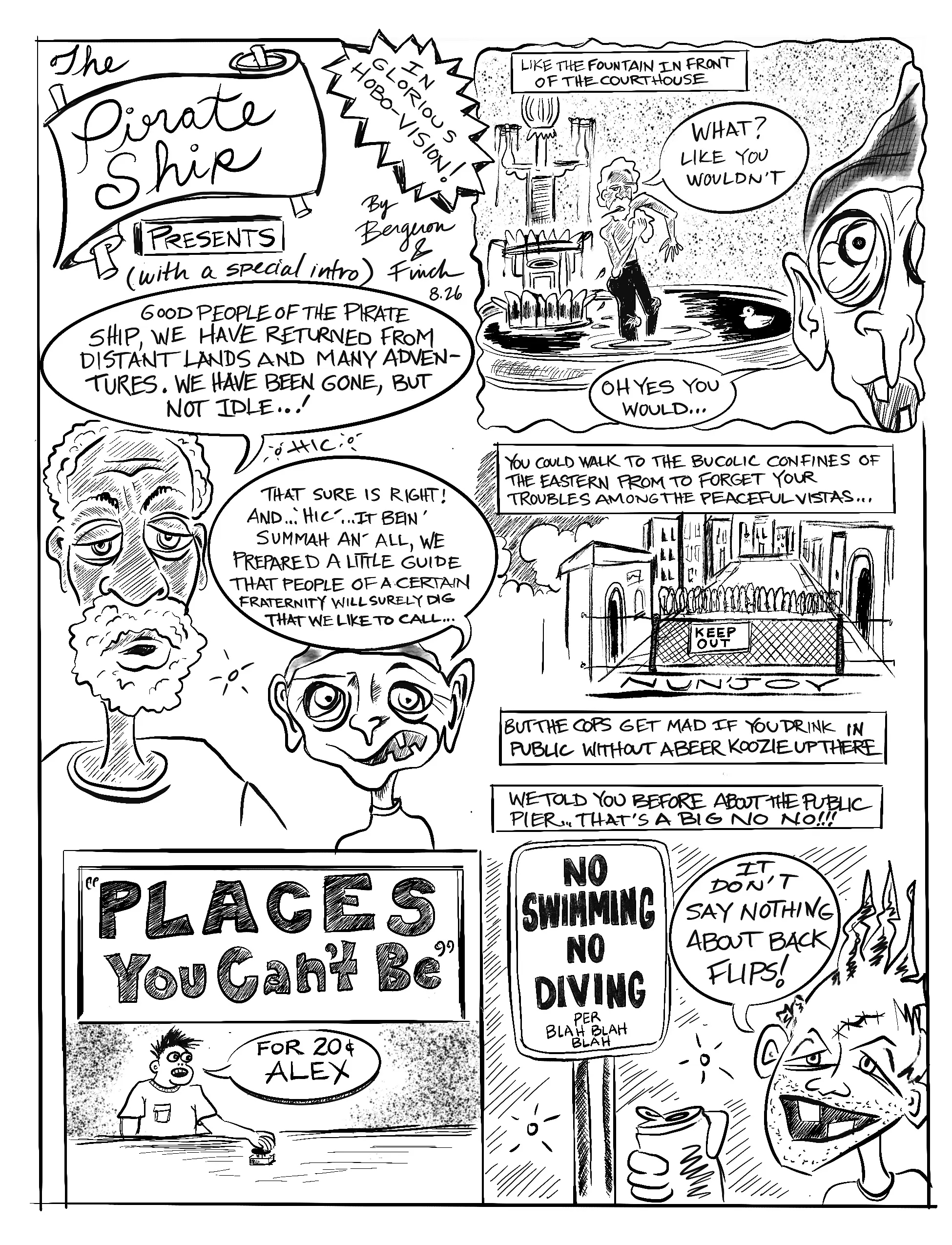
When I wasn’t writing about myself, I turned my attention to anything that annoyed me, which was pretty much everything that didn’t include me or my friends. In my first two columns I ridiculed South Portland (“there’s no there there”) and then dogs (“First, there’s the crotch sniffing …”), both of which raised hackles and haunches. I mocked outdoorsy types, bicyclists and ski bums “who clapped their creepy mitten-clad hands at the first sign of snow.” I held in contempt happy couples (gross), old people (tiresome) and new parents (groan), as well as homeowners, hacks who worked for the man, and sensible types who planned for the future (dull, duller, dullest). At the top of the list was anyone who lived off-peninsula, in the no-man’s land on the other side of I-295. These were hicks of the highest order.
My column was universally admired, except by those who did not care for it, whose numbers were not few. Still, I could walk into Coffee By Design on any given Thursday morning, when the paper came out, and see people hunched over the free weekly, reading my latest piece. I would swan by, their laughter like rose petals at my feet. (Yes, I was as much of a jerk as all this sounds.)

But then, when I was nearing 40, it happened: I met and married a lovely man and we bought a sweet bungalow in (wait for it…) East Deering. Yes, Peavey was off peninsula, where functional doorbells ring the death knell of cool. Birdwatching and cozy evenings at home took precedence over wilding downtown. Weekends meant riding our bikes to the farmers’ market in Deering Oaks, then to Harbor Fish, Standard Baking and Micucci’s, stuffing our backpacks for the evening’s dinner party as we went. Provisioning accomplished, we would finish our rounds with a coffee date at Portland Coffee Roasters on Commercial Street, sharing a croissant while we plotted the menu.
The entire scenario was so terribly twee it would’ve made my former self want to (as Miss Parker once wrote) fwow up. But I didn’t care. I had a front porch and a fireplace and, for the first time in my adult life, a place to call home.
Besides, my very public persona lived on, just without so sharp an edge – or to put it another way, less assholey. When The Bollard supplanted CBW in 2005, Outta My Way morphed into Outta My Yard, in which I described the challenges of homeownership, building equity, planning for the future, blah, blah, blah. (I have often said I’ll need to live forever to have enough time to eat every word I’ve ever uttered.) Outta My Yard appeared in these pages until 2016. I also brought out three books, won awards, was a frequent guest on such shows as 207 and Maine Calling, and was in demand as a speaker at schools and organizations across the state.

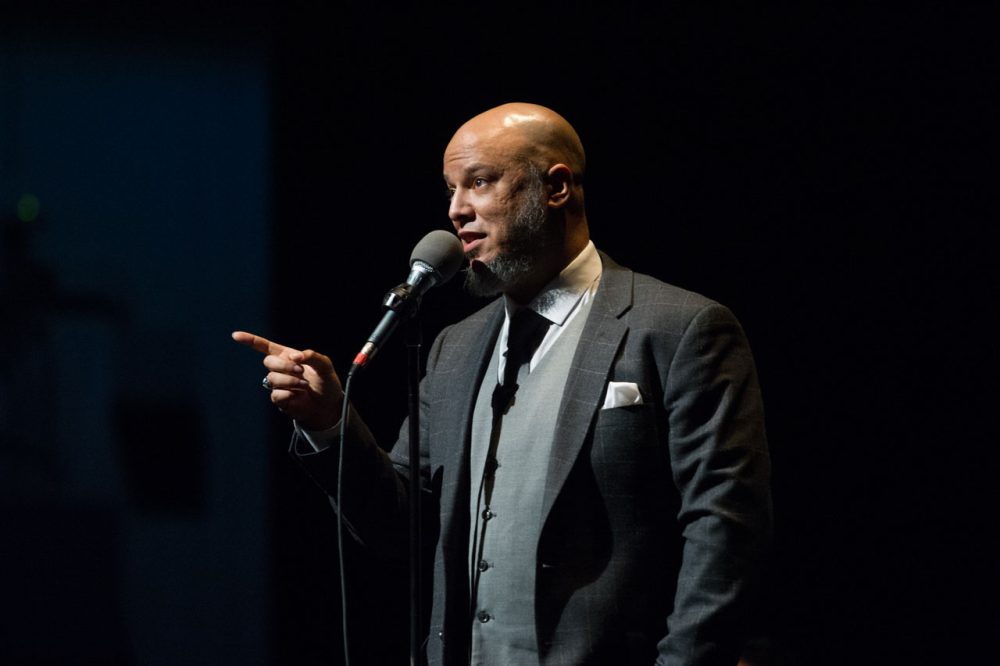
After six years of elder care and the death of my mom in 2009, I created and performed a one-woman show titled My Mother’s Clothes Are Not My Mother, which toured for six years (including two performances in New York City) and received the Maine Literary Award. Not long thereafter, however, I started to lose my fire for writing, even though it had fueled every step of my crazy path in life thus far. I left print journalism, put aside the book I was working on and gradually shifted my focus to helping individuals and institutions craft and communicate their stories. In 2019 I was invited to teach at an MFA program in Dingle, Ireland, and gave my first national keynote address at the Jobs for America’s Graduates annual conference. While I expanded my reach, I continued living large in the center of my own universe, and that universe was Portland.
That is, until everything changed.
•••
Just one more time around the block, I promise. But I know I’m lying to myself. Because my parking game is not just Yankee thrift. I want to prove I still have the upper hand on all the foodies and pandemic transplants who’ve overrun and smoothed the edges off my once gritty little city with their Teslas and condo towers and $20 orders of avocado toast. (It’s toast, people, with avocado smashed on top of it. Even I can make it.)
This is not merely another lament for the good old days. Cities change. That’s just what they do. (I’m sure some Edwardian gent similarly grumbled about the flappers who moved in and spoiled his proper Portland.) It’s that I want the newcomers to know they don’t get to buy everything with their money, that some claims to this city have to be earned. “Portland,” I want to scream, “you owe me!” Especially on this day of all days: the day I have come to town to begin to end my marriage of 20 years.
I know my idiotic behavior shouldn’t be rewarded, but as I creep up Federal Street again, lo, there it is: primo parking, a free one-hour spot behind the Press Hotel, the former headquarters of the Portland Press Herald, where I started my journalism career as a theater critic fresh out of college. As I climb out of the car, I smooth my skirt (I thought I should dress for the occasion), grab my papers and, this being 2022, don a mask. For a fleeting moment I feel like I’m back in Peavey’s Portland. I look around and say, to no one, “I still own this town.”
A half-hour later, my task behind me, I push my way out of the hushed, dim lobby of the courthouse onto the dazzling street. The wall of heat hits me, as does the enormity of the moment, and I nearly stagger. I’m not supposed to be here, I think. I waited. I didn’t get married until I was 40. I married the nice one. I wanted the clerk who filed my papers to know that. I wanted her to see I was different. That this wasn’t supposed to happen to me. But she just gave me a flat look when I slid the forms under her window, an expression that said, Sister, you’re a dime a dozen.
I feel a tingle in my eyes. I’d managed to fend off the tears while I was hunched over my paperwork inside, but my nose had dripped into my mask, which I now have to peel from my face. I need to cry, but where could I go? Not the front porch of the bungalow that for three more months will still be half mine, where I just left the “defendant,” as the clerk referred to him, with a pen in his hand. Not over in the shade of Lincoln Park, where the benches are already occupied by people whose troubles are far worse than mine. And not in my car that’s been baking in the sun and is surely a blast furnace by now, nor in that nice, dark, cool parking garage I’m gazing at across the street, where I could’ve purchased at least one small slice of Portland real estate to call my own, if only for an hour.
And so I do the only thing there is to do: I lean against the warm granite of the courthouse, bow my head, and weep into my snot-filled mask. I let my shoulders shake and the sobs come. And I don’t care. I don’t care who walks by or drives by, or if someone catches a glimpse of me and says, “My God, that woman leaning against the courthouse and crying looks like Elizabeth Peavey.” And I don’t care if the person they’re with replies, “Who?”
•••
We all dance on a razor’s edge, my friends. No matter how firm your footing feels, there is always something lurking – an illness, a layoff, a pandemic, a rent hike, a death, a divorce, an election, the end of an era — waiting to knock us off our axis and send us reeling. But if I have learned anything along the way, it’s that there’s no use longing for what was. My job is to square my shoulders and soldier on.
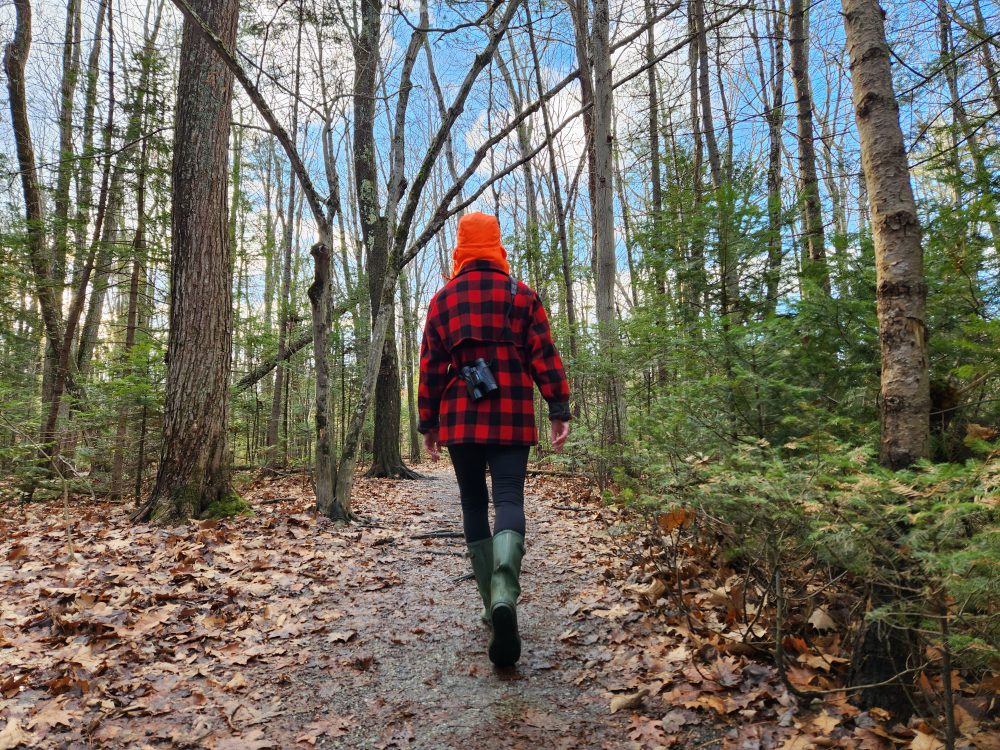
As for me and Portland? We’ve had a great run, and, really, it doesn’t owe me a thing. Besides, we’ve been down this road before — the leaving, the returning. While my current woods life suits me, I don’t think we’re done, Portland. At least not just yet.
Stay tuned.
Elizabeth Peavey’s new monthly column for The Bollard, Out There, debuts next month.