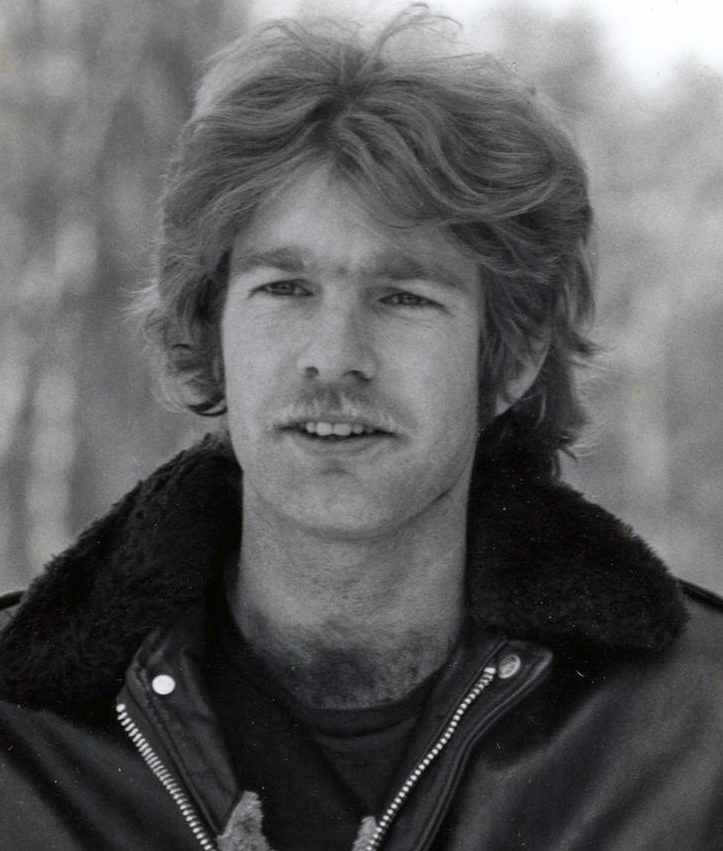
John Nichols during his days in The Big Apple. photo/courtesy Jim Nichols
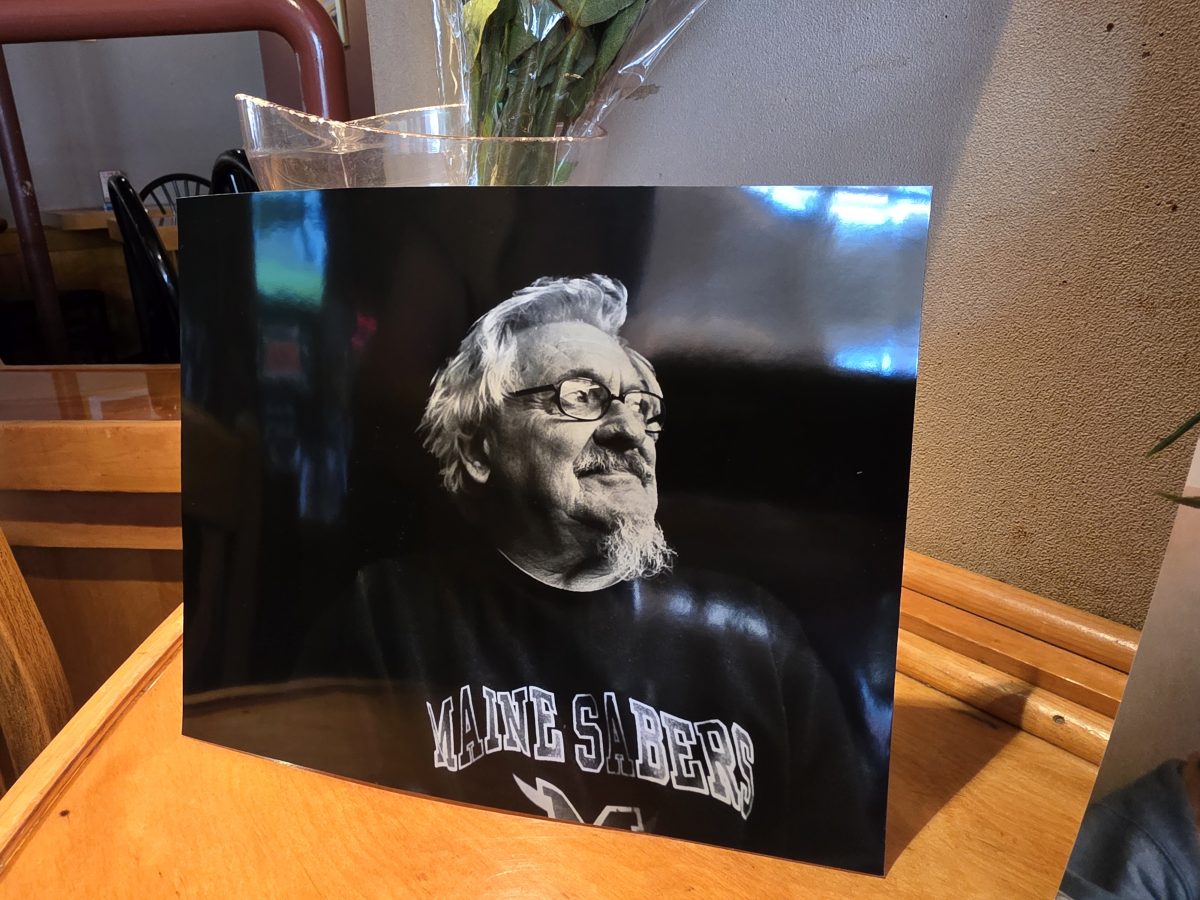
How to describe the incredibly creative life of our brother, Johnny? He was a writer; an actor, producer and director; a musician and singer; a treasured brother to eight siblings and a beloved friend to far more than we ever realized.
Johnny graduated from Freeport High, where he had class-clown tendencies and could never resist a one-liner. He was a keen judge of quality and authenticity early on, and the best-read of a family of voracious readers, something he managed despite his dyslexia, which made learning in a pubic-school setting difficult, but which he overcame through sheer will and smarts. After school, he never seemed pulled toward a conventional life, marching instead to the beat of his own amiable drummer.
Johnny loved the creative arts and spent a decade in New York City studying at the Herbert Berghof Studio and pursuing a career as an actor and singer. He truly had it all in terms of looks and talent, but never caught that elusive break that might have separated him from the pack. Undaunted, he returned to Portland and carved himself a niche there, founding the Stone Pinhead Ensemble, creating, producing, directing and acting in a series of satiric, funny and rude plays, first at the old Oak Street Theater and then the St. Lawrence Church on Munjoy Hill. His work attracted a rabidly loyal fan base, and he gathered a large troupe of like-minded artists around him who rejoiced as he did in the deliberate chaos of those productions.

Johnny also tried his hand at stand-up comedy and stage poetry, and found time to form a couple of rock-and-roll bands, writing many of their songs and playing rhythm guitar. His songs were — no surprise — smart and quirky, and his voice was a quality instrument. We should probably add that he left behind a couple of novel manuscripts that might yet see the light of day.
So, how to describe out beloved brother, Johnny? He was uncommonly gifted, very productive, definitely one of a kind, and he’ll be sorely missed, most of all by his family, but also by the friends he seemed to collect effortlessly, by other artists who respected his unique sensibility and the work he put in to bring it to life, and by all those who enjoyed and admired his literary and musical creations.
Johnny didn’t want a service, but those wishing to honor him can do so by donating to Hospice of Southern Maine, where tender care was given him during his last few days last fall.
Editor’s Note
I had the distinct pleasure of spending many happy Happy Hours with John Nichols at Brian Boru, the long-defunct but apparently indestructible Irish pub in downtown Portland. In the summer of 2007, The Bollard published an op-ed by Nichols, titled “March of the Puritans,” in which he boldly suggested the next progressive public-health initiative for Maine to pursue: a ban on second-hand fat, by which overweight citizens will be shunned and sequestered the same way smokers have been exiled and shamed. Astoundingly, neither the Maine Legislature nor the equally Puritanical Portland City Council seized upon Nichols’ lifesaving idea. Will no one think of the children?

In the fall of 2008, The Bollard launched The Keg Party, a political party formed to defend the right to party. Choosing the group’s leader, its Vice President, was easy: I nominated Nichols and he humbly accepted. Vice President Nichols served with honor for years, doing absolutely nothing to further the cause, in keeping with the party’s core principle of extreme leisure. John also wrote a hilarious and heartfelt remembrance of his good friend and fellow Stone Pinhead, Bob Colby, which we published in 2019.
I selected “Hitler’s Daughter” from a series of short stories Nichols wrote based on his days in New York, Slack in the Apple, posthumously published by his siblings, Jim and Julia. Raise a glass and light something up in honor of Portland’s most irascible champion of the good life!
— Chris Busby
“Hitler’s Daughter”
MARCUS and Kevin and I are sitting at the bar inside the Grassroots Tavern, on Eighth Street between Second and Third, St. Mark’s Place to the prigs. Fire Bombs in front of us accompanied by green beer. We had to head downtown after causing a ruckus in the Cathedral up on Fifth Avenue. What the hell, the whole church smelled like beer. We’d ducked in, leaving the parade without further representation for the Irish Puerto Ricans, which is what we are.
So Marcus is getting drunker and louder and Kevin is just sitting there, laughing silently, shoulders shaking, going along. Marcus probably shouldn’t have claimed St. Pat’s as the property of Albert De Soto, representing St. Lucia, of San Juan, because one of those drunken Irish bozos reclaimed the church as the property of Brian Boru, king of the isles, and started wading the pews toward us, burping like a humpback, so we stepped back out into the parade. Got the subway downtown and there we were.
“Here’s to the Irish Puerto Ricans.” Marcus raising his glass.
“And the African ones too,” says Kevin.
“Whatever, begorra.”
The Fire Bombs are working nicely. Marcus asks me what I think of his sister, who I met when we went to see his family in Queens. “I thought she was nice,” I tell him. “Just right for a sister.”
Kevin laughs.
“Besides,” I say, “I ain’t going out with no sisters.”
Marcus and Kevin both laugh.
“I dunno,” says Marcus, “my mother likes you. If she decides you’re the one…”
“Hey, if she can cook like her mama,” says Kevin, “I might take a shot.”
“Oh, no,” says Marcus, “she can’t cook a lick. Burns the livin’ shit outta ever’ting!”
We all take a drink. Marcus is biding his time before he meets his girlfriend, Rosetta. He knows she’s going to get him to marry her, and he doesn’t see anything he can do about it. Now he looks at his green beer and sighs.
“Just don’t show up,” I say.
“She’d kill me,” says Marcus.
“Yup, she would,” says Kevin, shaking his head.
“Well, maybe she’s the one. Maybe you should marry her.”
“Nope, I don’t think so. You want to go out with her?”
“Not me,” I say. “I’m waiting for someone calm to show up. Bland, maybe.”
“No hot-tempered Latin chicks.” Marcus looks at his watch. “Gotta go. She’s waitin’.” He stands up.
“What are you doing, Kevin?”
“Goin’ back to the theater,” he says. “Helpin’ Francesca take the lights down in the second-floor box.”
He gets up and walks with Marcus to the door.
“Adios,” says Marcus.
“Mucho grande teatas,” I say, my only Spanish phrase.
Breaks them up as they reel out the door.
The bartender puts a shot of Irish whiskey in front of me, tells me Marcus bought it when I was in the bathroom. I still have a full green beer sitting there. I’m thinking of getting nice and shitfaced. The Job is getting worse at the bookstore, the big one in Grand Central; the boss having left his wife in charge more and more. The real owner, Barry, is a nice guy, started with a book cart, then a one-man store, downstairs by the trains. Now he’s got this goldmine on the main concourse, books just fly out of there. He understands the business, having worked his way up from a cart.
His wife Ginny feels that running a tight, though demented, ship is the right way to go. You can feel her hot breath curling up your back as you bend to your chore — in my case, the Sci-fi, Occult and Religious sections. I tried to make it one section, seemed logical. Ginny looked at me like I was crazy. I order the books, but Ginny wants to oversee my orders. She worries about everything and it’s stressing me out.
Yesterday I was going through a new, big, table-size encyclopedia of the occult, had it propped on the top shelf, turning pages, when I heard this voice say, “They’re still after me, you know.”
I looked to my left down the aisle, there was a big, bald, sweaty guy looking at me.
“But you knew that,” he said.
Uh-huh, I thought, turning the page of the encyclopedia, seeing a big glossy photo of the sweaty guy I was just looking at. Aleister Crowley, it said. I looked back and he was gone. What the fuck, I thought.
Anyway, I’ve had a few and I’m feeling good and I don’t even want to think about the damn store. So I’m sipping my whiskey and beer, the music is bluesy, mellow; seems like more women than usual, milling around, the brave ones with “Kiss Me I’m Irish” sparkly green tags on their blouses or coats.
The bar goes quite a ways back, over a hump half-way — you’ll trip coming back from the bathroom if you’re not careful — and sometimes a big crowd, all the way back by the dartboard. There are interesting people coming in here, you can sit down at the bar and start talking to a stranger who might turn out to be weird and articulate, which works for me.
So here comes this girl, maybe a little older than me, early thirties, blonde, lissome, petite, with a tag that says “Kiss Me I’m German” on her chest, sits down and asks if this seat is taken.
“Nope,” I say.
“Well, it is now.” She laughs and tells me her name is Gudrun and what’s mine? I tell her and she leans against me and looks into my eyes and says, “Do you think I’m pretty?”
“Sure are,” I tell her, “prettier than a hog jowl swimmin’ in possum gravy.”
She frowns and says they don’t have possum gravy in West Berlin. She pouts a little and says, “I have no friends. No one likes me.”
“I’m sure that’s not true,” I tell her.
“I was at a party in Long Island,” she says, “and when I tell the girls that I’m Hitler’s daughter, they all move away from me.”
“Imagine that,” I say. “Are you really?”
“Well, my mother dated him. When I ask who my father is, they all go, ‘SHHH. He’s a very great man!’ My grandparents. My mother. That’s all they say!”
I memorize her features so I can compare them to pictures of Hitler — whose face is on more books than any other celebrity — when I get back to the bookstore.
“Well,” I say, “today you’re Irish.”
“Wish I was,” she says. “Will you come home with me?”
“Sure,” I tell her, sensing a possible historical moment…
She’s got a big, old Buick and drives like it’s Formula One out there. We go across some bridge and end up in Hoboken. She’s staying in her absent aunt’s small house almost across the street from the PATH train station, so why she’s driving is beyond me. Anyway, she has this keg of Heineken in her fridge, and a bottle of Schnapps she takes out of the freezer, and we settle in on the couch and have a few.
We end up laughing and kissing and rolling around on the couch and then we get up and stagger into the bedroom. Neither of us is sober enough to be shy, we just drop everything and climb into bed. We’re just feeling each other, our skin acclimating to each other’s and she asks if I have any birth control devices. I think she means rubbers.
“Nope, fresh out,” I say.
“Well,” she says.
It hits me: do I want to risk being the father of Hitler’s grandchild? “Got any Vaseline?” I ask her.
“Sure,” she says, smiling. She jumps out of bed and smacks into the wall on her way to the bathroom. Comes back in with a tube of Vaseline. I have my way with Hitler’s daughter.
The next day, I catch the PATH train back to Manhattan. I’m in the bookstore checking out the book covers with Hitler’s face on them. Damn, if she doesn’t have his eyes, and a little thin mouth like him. I’m thinking no one would ever believe me, even if I were so inclined to tell my tale. But deep down, I’m thinking, hey, sins of the fathers and all that, but one for the Gipper, you know?