illustration/Ryan Maher
It is well known that seagulls make wonderful pets. They are affectionate creatures and highly intelligent. Domesticated gulls are capable of amazing feats of memory and language. Their song is melodic and soothing. They are playful and perceptive and can form relationships that last years.
For the purposes of this discussion we shall restrict ourselves to what is commonly known as the Herring Gull. The offshore, Black-backed Gull, while a favorite companion in earlier times, is simply too large a bird to comfortably inhabit today’s tiny house or apartment. And truth be told, the Black-backed also has a reputation for being a tad demanding — unreasonable, even — compared to the sweeter disposition of its cousin.
Gull ownership is a responsibility not to be taken lightly. Because these birds are so highly intelligent, they require constant mental stimulation. Gull owners find their birds enjoy playing fetch, listening to music, and learning our languages. Gulls have acquired extensive vocabularies and some can form complete sentences. Be careful what you say in front of them — seagulls are among the bird world’s best mimics.
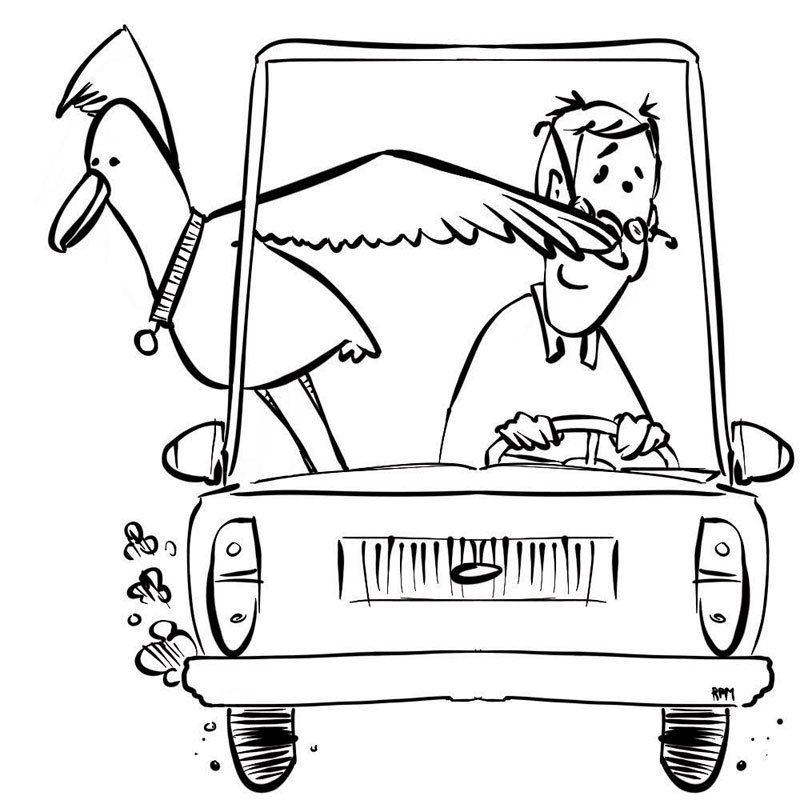
Nothing quite compares to going on a drive with your gull. It can bond person and pet forever. The sea bird loves the strong yet soft friction of the wind and will even hang its head out the window to increase the effect. Meanwhile, the proud owner enjoys both companionship and the admiring attention his handsome bird receives from interested passersby.
While there are a number of reputable gull breeders, the demand for these pets often outpaces supply, and black-market birds have infiltrated the marketplace. Better to acquire a fully fledged gull in the wild from one of the better gull gathering spots.
Try to avoid the Dump Gull; these tend to be less well-intentioned. Instead, look for a bird that chooses to roost upon a church or school. Observe the bird’s interactions with others: are they playful and kind? If not, better keep looking. Many gull owners say the most solitary and thoughtful birds make the best pets, as these are the ones clearly seeking a new direction in life.
Pick the right bird for your disposition and lifestyle. Are you energetic and quick-moving? Then a younger gull might be best. Younger birds are also easier to train to the leash and have acquired fewer bad habits. Older birds are more set in their ways and can be excruciatingly slow at Scrabble.
Capturing your gull requires patience. Sea birds need to be convinced you have their best interest at heart. Gifts of food are always welcome, as long as they meet the lofty culinary standards of the most sophisticated gulls. Take-out from one of the better restaurants is recommended, particularly Asian cuisine, a seagull favorite. Skip the fast food: the birds fighting over McDonald’s French fries are obviously not discriminating enough to be a good companion.
Try impressing the gull you desire with your intellect by reading to it; poetry and biography are among their favorite genres. Eventually this process of mutual appreciation (and a trail of bread) leads to the gull voluntarily hopping into your vehicle. Voila! Simply by slamming the door you have entered into a special life partnership.
The next few days and weeks are a critical phase of your relationship with your pet. Your bird is high-spirited and requires a period of adjustment to its new surroundings. As an owner, consistency will serve you well. Be firm in your requirements, but fair. After all, the bird cannot be expected to know how to use a toilet until instructed.
You must be flexible, as well. Your seagull rises at dawn and expects to be walked. The bird’s ungainly beak means mealtime can be a bit messy. And you need to expect relationships with other people in your life to come to an abrupt end.
Fortunately for you, I have assembled information, based on years of experience living with my gull companion, on my website: thinkingaboutowningaseagull?.com. There you will find training tips, menu suggestions, and a very helpful and extensive emergency first-aid page.
With patience, sympathetic neighbors, and lots of lo mein, you and your seagull can roost together in the same cozy nest, leaving all the inter-species anger and resentments in the past. I hope you have found this article helpful in making your decision about seagull pet ownership. My advice is to not delay: your perfect bird awaits!