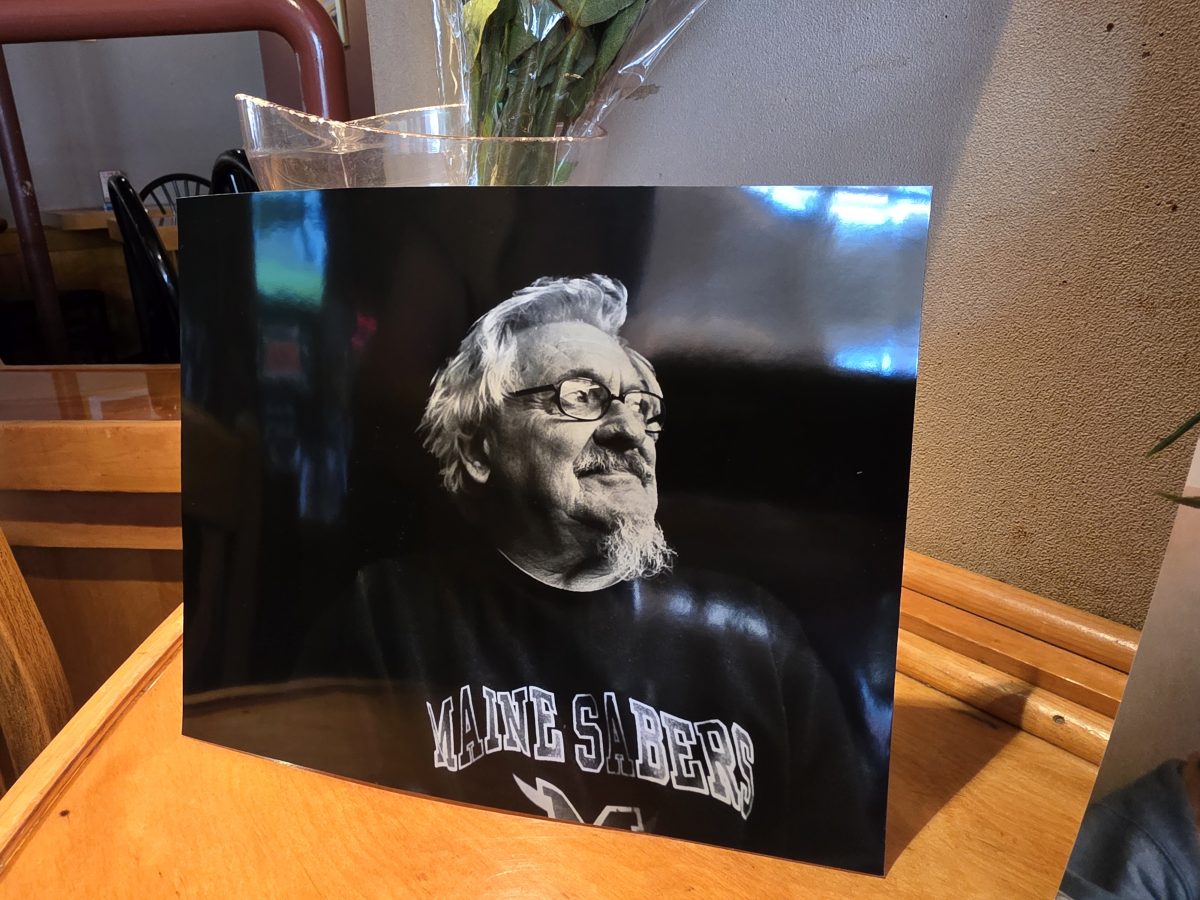
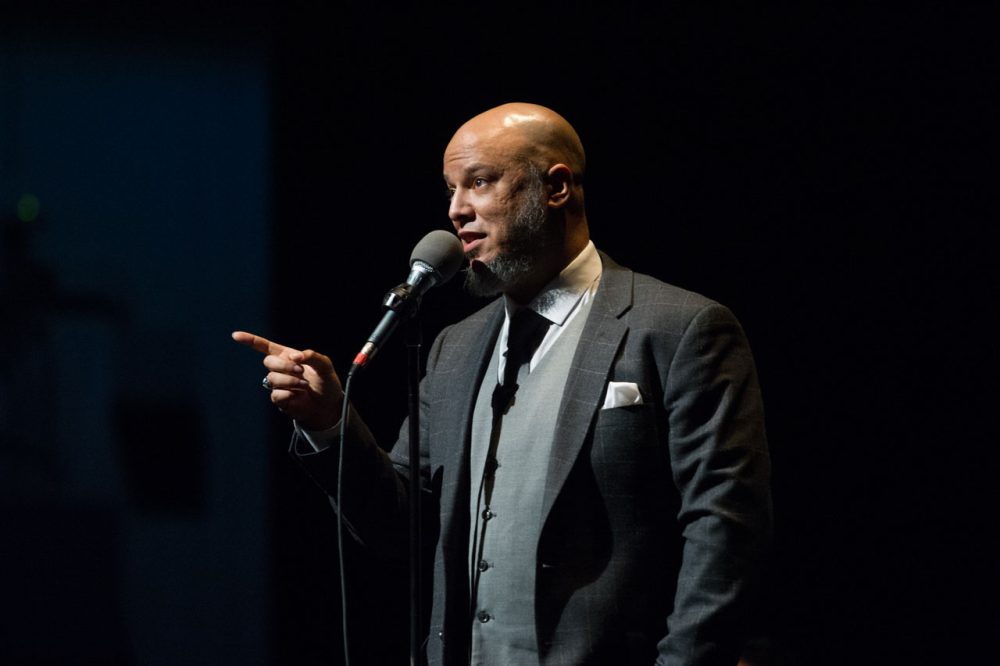
Arnold “Grey Wolf” Craney.
When I was growing up, I think It’s a Wonderful Life was on TV more than any other movie. And in the 1980s, I watched it every chance I got.
The story begins with a suicidal protagonist, George Bailey, who believes he’s worth more dead than alive. An angel shows him a vision of how his town would have been worse off had he never been born, and thus convinces George that he “really did have a wonderful life.”
It’s a powerful film, but is it really a “wonderful life”? Perhaps the angel should have said, “You see, George, you had a better life than your neighbors did.” If the wonderfulness of your life is measured by the misery of everyone else’s, you may live in a shithole country.
My friend Colin messaged me recently to ask how I was doing. I replied, “Everything is a struggle, but you already knew that.” This morning I received his response: “Oh, yeah, it’s always a toss-up to deactivate or not.” Hamlet, alive and well in the 21st century — and still debating that question.
Colin continued, mentioning his sustained sobriety and expressing gratitude: He has an apartment, a vehicle, plenty of food, and his health is decent. I’m happy for him. That’s more than a great many people have. But is it enough? Scores of friends fill my social media feed with disturbing posts describing their waning desire to exist.
What if you don’t have good health? Getting housed doesn’t increase the life expectancy of a street person much, if at all. Our life expectancy is comparable to that of cavemen, and for similar reasons. If a person is out there long enough, the damage cannot be repaired. There are statistics concerning the mortality rates of homeless and formerly homeless individuals. I won’t cite the numbers. Those statistics were pals of mine.
My good friend Arnold “Grey Wolf” Craney succumbed to a stroke this fall. Mark Stephen Thompson (a.k.a. Trake, the Mayor of Preble Street) passed away following Thanksgiving 2022. Ronnie “Wheels” Baker died just before Thanksgiving 2019. Bobby “Chops” Darling died of heart failure in October 2018. All of them — and a substantial number of other friends — got housing shortly before they died.
I was visiting Wheels at his place just hours before he passed. He wasn’t able to spend Thanksgiving with family, as he had the previous year. He was broke, had no pot, no beer. All he had was a bag of drugs some random person had given him at the corner store. He asked me if I knew what it was and what I thought he could “get for it.” I said I didn’t know, but it looked like some kind of dope mixed with meth, a speedball of sorts. I added that if he had a buyer, he’d probably get forty dollars for it. In the morning, he was dead.
Wheels’ body remained in his apartment into December. I’d been trying to contact him every day for two weeks, and eventually hiked out to his place with Bob Bergeron to investigate. I was notified of his death the following day, Dec. 8. I was also asked if he’d been using drugs, because the official cause of death was a heart attack, to which was added: “probable overdose.” At first I was offended — Wheels wasn’t a hard-drug user. Then I remembered that mystery bag of shards.
I also recalled how depressed he’d been. Waxing philosophical — which was unusual for this rugged Bostonian — Wheels had me watch a video (featuring Pink Floyd’s “Wish You Were Here”) that weighed the absurdity of such concepts as heaven and hell. Then he asked if I believed in hell. He never asked if I believed in heaven.*
Most of the “substantial number” of friends I referenced earlier were distraught and depressed before they died, the circumstances of their lives having been only moderately improved, if at all, by being housed. A lot of these cats are main characters in my book about my time on the streets of Portland, Transience.
That story also begins with a suicidal protagonist: yours truly. It concludes with my being housed. And now here I am, painted into a corner, a modern-day caveman stuck between the proverbial rock and hard place.
The state Department of Health and Human Services wants 60 percent of my income to cover missed child-support payments and fines and fees accrued during the years I was homeless and incarcerated. The Portland Housing Authority wants 40 percent of any money I make. Both wage garnishings would be made before taxes are withheld from my paycheck. I failed junior high math, but even I can see the flaw in that equation.
An angel might say it’s a good thing I can’t profit from my labor. I just hide in my state-funded cave, afraid to make a move. People say it takes money to make money, but I need a lot of money, and if I earn a little money, I lose it all. I can’t figure out how to get to a lot without first getting a little. The state promises anyone can do this (and pushes their addictive solution in every corner store and supermarket in Maine), but I also have enough math to know how lotteries and scratch tickets work. I didn’t even get any COVID “stimulus” money; nor do I receive a regular government check.
I don’t post about it, but each and every day I also debate deactivating.
I went to a bookstore last June. I seldom have enough pocket change for a used paperback, so I don’t visit often. Ironically, the owner was reading the final installment of Transience in The Bollard when I entered the store. He asked if I planned to publish it as a book. When I said that was my plan, he advised me to be careful: if I made too much money, that could jeopardize my housing situation. (And as this local bookseller well knows, authors seldom make any money at all.)
The bookseller was hardly the first person to recognize the catch-22 I’m in. Three volunteer lawyers with whom I had a conference in 2019, and easily a dozen social workers I met with during my eight years homeless or jailed in Portland and York County, tried in vain to explain how I could ever become a gainfully employed and housed citizen again.
I don’t know what can be done to prevent a person from becoming so unstable. Everyone has different circumstances. Not every person on the streets is an addict or alcoholic, and not all of them experience mental illness, but actually providing free and effective treatment for those common health problems — not just “increasing access to” medical care that’s neither affordable nor available when you need it — would help.
Housing, health care, education and food — all of these need to be considered basic human rights. And we should recognize how those rights benefit society at large. As the pandemic so dramatically demonstrated, if your neighbors are healthy, you’re healthier. If your neighbors are educated, your town makes more enlightened political and social decisions. If your neighbors have roofs over their heads and food in their cabinets, they’re less desperate and, thus, less inclined to want anything you have, much less risk trying to steal it. All these social benefits — which politicians and big media characterize as burdens — are investments that make our communities more prosperous and less dangerous.
Santa Claus killed my faith. Once that deception was revealed, I immediately saw holes everywhere — a scripted, Swiss cheese version of reality. Like Buddhism without the solace of enlightenment, everything was empty, the whole world a cruel illusion designed to cause suffering. So as a youth, I rebelled.
I started junior high with a five-day suspension for drugs. I was 12. I received four more drug suspensions, along with perpetual detention, uncountable other types of suspension, probation violations and failing grades. Then I quit, never completing freshman year. But I’d attended several AA meetings and a few drug classes by then, all court-ordered, and had a few years of counseling. I recently joked to Pastor Jeff, “I’ve been in therapy for forty years. I wonder when it will finally take.”
Back then, I believed the world would come ’round to my way of thinking someday. That’s about as likely to happen as a breakthrough in my therapy, yet I hold to my principles and try to console myself with this thought: The beating I’m taking in this incarnation is hopefully balancing my karma. But if one must resort to mysticism to rise above the absurdity of inescapable suffering, is it really a wonderful life?
Happy holidays, everybody. “Joy to the world” and all that jazz. Oh, and George Bailey is still a hero.
*I wrote a song that dark December day, “Monsters at the Quick Stop,” and I play it on my YouTube channel, Kenny Wayne from Maine, where you can also finds hundreds of other videos. Please subscribe and share. To read Transience in its entirety, with dozens of illustrations and photographs by local artists, subscribe to The Bollard at patreon.com/thebollard.