Leading by Example
The other day, someone I know posted a racist meme about Syrians. Among the many racist comments posted below it was one praising Gov. Paul LePage for standing up to whiny-ass liberals by declaring he will not allow Syrian refugees into Maine (a decision the governor doesn’t actually have the power to enforce).
I see this kind of thing a lot online. There’s an idea out there that posting these types of memes and messages is strong or brave or tough; that by making statements like this, conservatives are “standing up to” someone.
The opposite is true. It’s a flat-out, tail-between-the-legs, teeth-chattering, “It’s-a-g-g-g-g-g-ghost!” Scooby-Doo kind of cowardice. There is no evidence that Syrian refugees had anything to do with the Paris attacks, but the conservative mass’ reaction is to ban anyone fleeing that country from entering ours. Meanwhile, despite mountains of evidence directly connecting certain white Americans to acts of terror perpetrated inside this country, we still allow people of the Caucasian persuasion into movie theaters, schools and Oklahoma!
That’s because this is about race. It’s about religion, sure, but only 20 percent of Muslims live in the Middle East and North Africa. Sixty percent live in Asia, but you never hear of a Chinese person getting kicked off a plane for looking suspiciously Asian.
Education
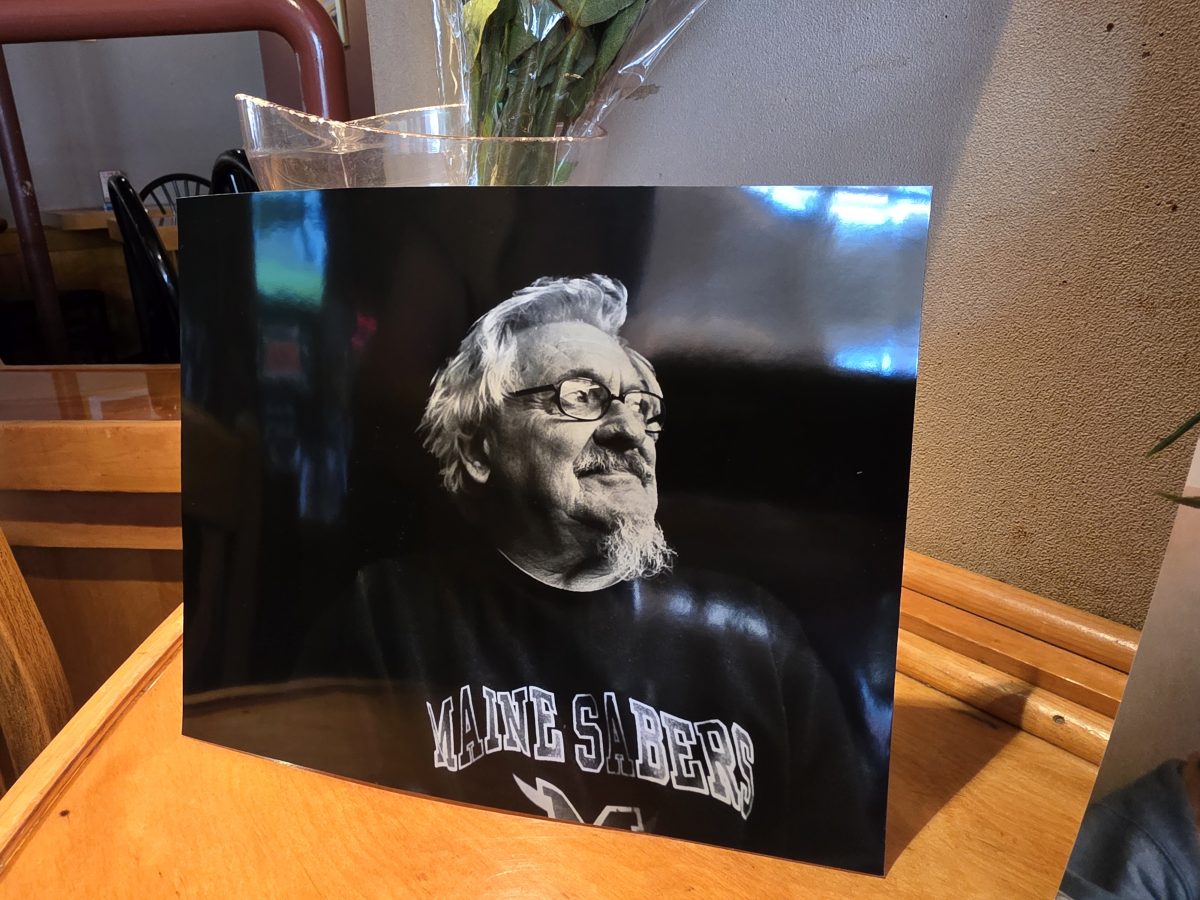
Amos Libby teaches Middle Eastern and South Asian music at Bates, Bowdoin and Colby colleges. He also does private tutoring for students of the Arabic language, which he studied in Morocco. He is also an activist for Palestine. He is also white.
On Oct. 12, 2002, three different nightclubs in Bali, Indonesia, were bombed by Jemaah Islamiyah, a South Asian, Islamic extremist group. Amos had been in one of those clubs shortly before the bombing. Several of his friends were killed in the attack. It’s not something he likes to talk about. When I asked him about it, he said, referring to this column, “Whoever reads this can use their imagination as to what one sees when that many people are exploded.”
Amos’ experiences make him a man of unique perspective, a perspective that is incredibly valuable and absolutely necessary right now. I asked Amos about conversations he’s had since the Paris attacks. “Someone I knew as a child,” he said, “who is a really good person, a very kind person … She messaged me in the wake of the Paris attack and said, ‘Is there a faction of the Muslim religion that doesn’t believe in executing people by stoning or other barbaric methods for minimal offenses or because they feel their religious beliefs have been offended?’”
I asked Amos how he answered that question.
“Well,” he began, “after jumping up and down and swearing for a few minutes, and wanting to weep at the fact that somebody would even ask that question … my answer was, ‘All of them.’
“I mean,” he continued, “all of the Muslims who you don’t know, who live all around you, who manage not to kill you everyday. … They are the people who are doing the exact same thing you’re doing now. They’re feeling shock, feeling sadness, but also living their lives with the knowledge that at some point they’re going to be called upon by a complete stranger to apologize for or condemn an act committed by someone from whom they are wholly separated. The average Muslim is as connected to the attacks in Paris as the average American, casual Christian is to Timothy McVeigh.
“We get problematic terms like ‘Muslim World,’” Amos said. “There is no ‘Muslim World.’ There are hundreds of them. The Islam in Indonesia is nothing like the Islam in Yemen. Islam in the village where I stay in Palestine is nothing like the Islam you find being practiced in Konya, Turkey. Of course there are common threads — it’s a faith — but terms like ‘Muslim World’ and ‘Arab World’ are classically reductive. They turn an incredibly heterogeneous population, both ethnically and religiously, into this amorphous mass of brown anger, and that’s all you ever see.”
Luckily, some of us see more. Have people told Amos to go join Hamas and die? Of course! But the prospect of new refugees has also prompted some people to contact him about learning Arabic.
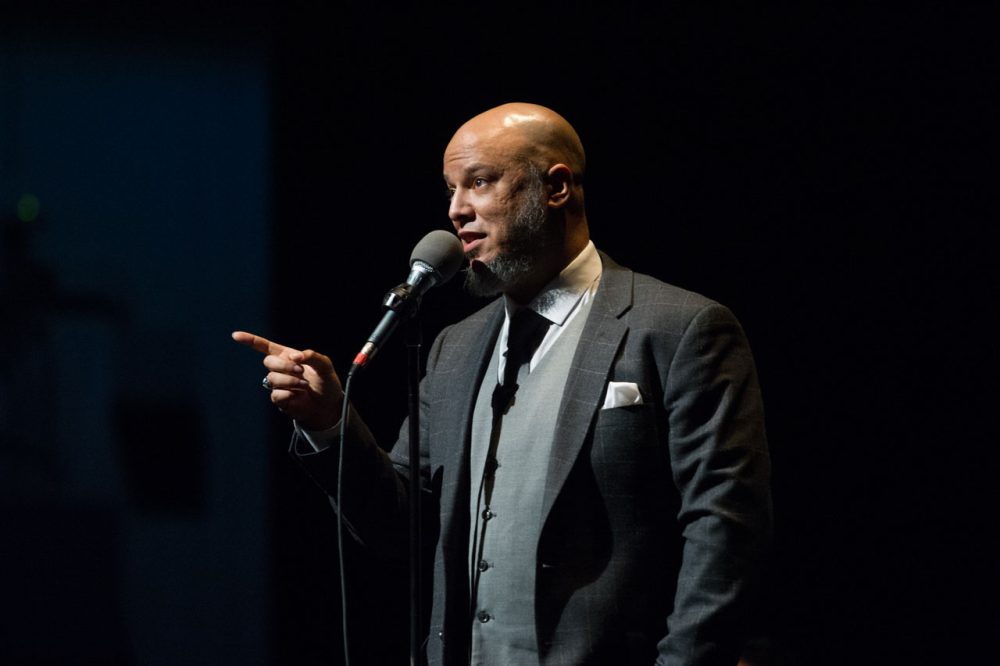
Samuel James is an internationally renowned bluesman and storyteller, as well as a locally known filmmaker. He lives in Portland and can be reached at racismsportland@gmail.com.