Book smarts
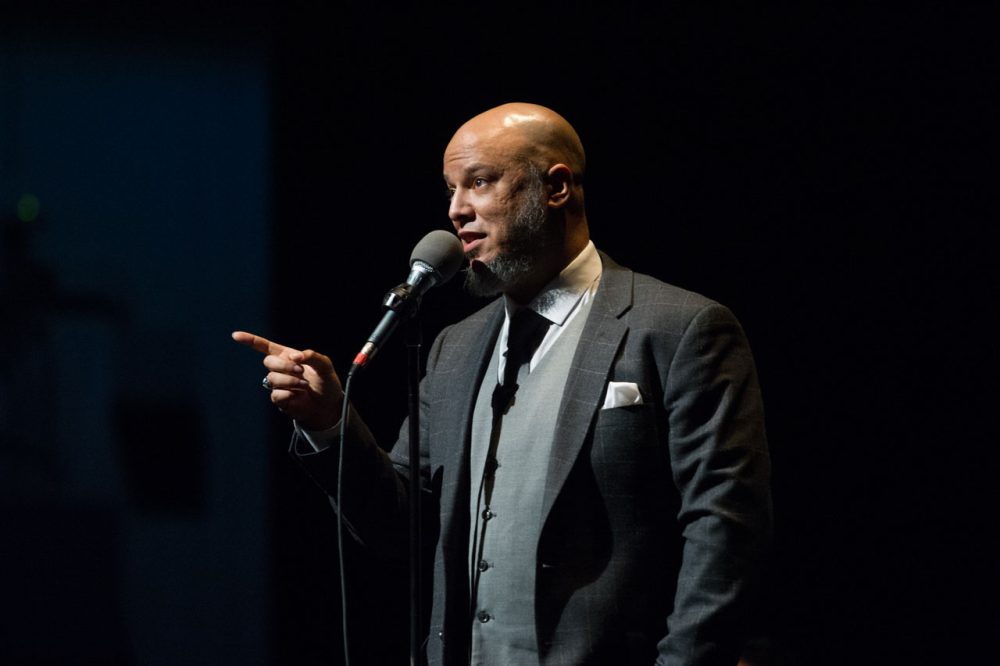
One of the things people find hard to believe when I give talks and readings across the state (aside from the fact that, no, a seven-year-old didn’t dress me) is that I am a writer who, as a kid, didn’t read.
That’s not to say I couldn’t read as a child. I remember working my way through those SRA (Science Research Associates) lab boxes that contained test cards with colored tabs to indicate reading level. Red and orange were at the low end of the spectrum, blue and aqua at the high. I think I more enjoyed shuffling and sorting the oversized cards as though I were playing poker than the actual reading part, but I must’ve prevailed since I’m not still sitting in Mrs. Babkirk’s second-grade classroom with my knees up to my ears in one of those kiddie desks.
And it wasn’t for lack of literature at home. Our house was filled with books. Everyone in my family read but me. I can see the titles stacked next to the ashtrays on my parents’ night stands: the Micheners and Wouks, All the King’s Men, The Bell Jar, The Carpetbaggers, Ulysses, The Godfather. Books I was instructed not to touch. I also remember hearing laughter coming from my brother’s room. I’d peer around the corner and see Jimmy’s nose buried in a book. “What’s so funny?” I demanded. I wanted to know what was in that book that made him laugh the way Bugs made me laugh. But I was always told, “You wouldn’t get it,” and was dismissed with the smart flip of a page and another chortle thrown in for insult.
Did this make me run to my bookcase? No. I preferred to either be outside wilding around or inside sitting in front of the box with my best friends: Mr. Green Jeans, Flip Wilson, Micky Dolenz, Merv Griffin. Sure, I had a few things I liked to read – the Little Bear books illustrated by Maurice Sendak, Alice in Wonderland, Grimm’s Fairy Tales, the back of my Frosted Flakes box – but my TV posse? I didn’t have to go fishing around in a book to find them. They came to me. All I had to do was turn a dial, toss a Pop Tart into the toaster, and I was magically transported to another universe.
I have to say I feel a little intimidated when I attend literary events with other writers and this childhood-reading subject comes up. I hang back as they longingly reminisce about sneaking Camus and Dostoyevsky under the covers with a flashlight, translating the Iliad back to Greek during recess or debating the merits of deconstruction on the jungle gym. Oh, and playing school. It seems all writers played school when they were kids. And they always wanted to be the teacher. Me? I used to play restaurant.
I have only the vaguest recollection of reading in junior high school. I got placed in the loser English class, where we had to read the deadening dull Ivanhoe and Billy Budd. The cool class got to read the Odyssey with Mr. Cakouros, who would drop a stack of books to the floor on the first day of school and announce, “There. Now you’ll never forget me.” The only other book I remember from that time is a dog-eared edition of The Catcher in the Rye shelved in the back of the school library. A classmate had passed on the page number of the naughty bits but probably didn’t need to. I’m sure it fell right open to the section, although for the life of me I can’t remember what it was.
Next came high school and with it, Moby Dick, Huck Finn and The Old Man and the Sea. The only pleasure reading I recall was Gone With the Wind and The Profit. My high school career ended with an independent study I designed with a new, young English teacher, on whom I had a sort-of crush. I wanted to read the American greats, I told him, starting with the juicy stuff: Fitzgerald and Hemingway. He insisted, however, that I begin with James Fenimore Cooper, I think to test if I was really interested in reading or just flirting. With my dorky curly perm, monogrammed sweater and silver sparkle Elton John shoes, I was hardly a Lolita, but he handed me The Deerslayer with a long look that said, I’m on to you. I never made it through the Cooper, never completed my independent study and never really forgave this teacher for embarrassing a young girl who maybe just wanted the attention of a man who read books.
Things got no better when my plans to go to the University of Denver (the only school I applied to) fell through at the eleventh hour, and I was railroaded up to Orono. I don’t even remember how it happened. All I knew was that I was sitting alone in a dorm room, unwilling to go look up the former Bath classmates I had so loudly sworn to leave in my dust, unwilling to go make friends with people who had actually chosen to go to UM-Zero, unwilling to do anything but sit in my room, drinking Lipton powdered iced tea and eating Pepperidge Farm cookies until I made myself sick.
At some point, I did venture out. I didn’t have a car, so I wandered around campus, poking my head into this building and that, until I eventually found myself in the bookstore in front of a display of paperbacks. I’d never purchased a book before, but all those colorful covers seemed so comforting, so appealing. The stock on which they were printed was cheap, so the books themselves weighed almost nothing. They had that yummy new-book smell. I remember standing there and browsing and dipping in and out of all those titles until Orono and Denver dissolved into another universe of which I was not a resident. I will live here now, I decided.
I bought my first book on that day, The Hobbit, for a couple of dollars. I quickly discovered fantasy was not for me, but the book went on the shelf in my dorm room anyway. On The Road came next, then Zen and the Art of Motorcycle Maintenance and Even Cowgirls Get the Blues. Now we were getting somewhere. In class, I read D.H. Lawrence and E.M. Forster. More books were added to the shelf, and my own small library was starting to form. Within a year I would change my major from Communications to English. After three semesters, I would move to Portland and attend USM. I’d read Chaucer and Joyce and Beckett. And when I finally finished my degree, I’d work my way solo through the Russians, all of Dickens, a bit of Conrad and the Austen cannon — just for fun. Books would continue to accumulate and sprawl and pile and take over every living space I ever inhabited. And even when I wed and joined libraries with my husband, duplicate books were held onto because they were, well, our books. Books were one of the ways we helped define who we were.
I thought of all this the other day as I stood before the general reading section of the USM bookstore. I had in my hand the $50 gift card I’d received with my Maine Literary Award for Best Drama in May. I’d been told by my friend Barbara Kelly that I should probably get over there and redeem the card before it was too late. She should know. Until August, when USM announced that, due to budget cuts, they were shutting down the trade (a.k.a. general reading) section of the store, she was its manager. She’d just celebrated her 24th anniversary there and was given her walking papers the day she returned from vacation. There is not an author in the state of Maine who does not owe Kelly a debt of gratitude, and not just for helping to promote our work. She reads everything – and I mean everything – and does so with such joy and ardor that she makes us all want to be better readers – and writers.
I look up and picture a young girl walking through that door sometime in the not-too-distant future. Maybe she’s come in for a textbook or a Huskies ball cap or just a marker. Or maybe she doesn’t know what she’s looking for. But what she won’t find is these shelves of books with titles by so many Maine authors, so many members of the USM faculty, and so many nationally known writers who have come to read at this bookstore at Kelly’s invitation. The chance to be drawn in by a wall of books and stumble into a new universe is a chance she will never have here.
Full disclosure: The same budget cuts prompted USM’s Theatre Department to cancel the public-speaking class Elizabeth Peavey has taught for the past 20 years. Though she was able to subsequently pick up an evening class via USM’s Continuing Education program, she does not know when her regular class will be offered again.