The fire this time
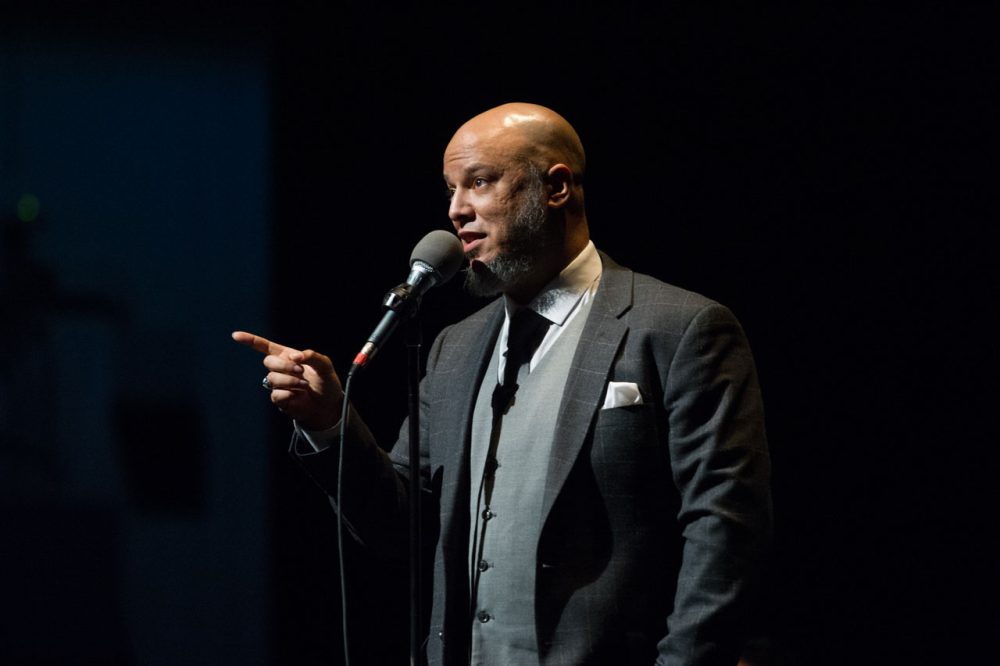
On January 15, 1979, James Baldwin gave a speech in Berkeley, California. It’s not the young, firebrand Baldwin of black-and-white photos. It’s an older, prudent Baldwin who’d seen the Civil Rights Act and Voting Rights Act long passed and the problems remaining.
I think about this speech a lot. Not because Baldwin’s words remain relevant, but because, over time, they have somehow become more relevant. And now that Maine is being occupied by Trump’s army of masked cowards, it feels as though Baldwin is speaking of this exact place in this exact moment.
The speech is too long for this column, but this is the last part, and I hope it brings you not peace, but focus.
“When the Europeans arrived in America, there was a moment in their lives when they had to learn to speak English, when they became guys named Joe. Guys named Joe couldn’t speak to their fathers because their fathers couldn’t speak English. That meant a rupture, a profound rupture, with their own history, so that they could become guys named Joe. And in doing so, Joe never found out anything else about himself.
“Black people in this country come out of a history which was never written down. The links between father and son, between mother and daughter, until this hour and despite all the dangers and trials to which we have been subjected, remain strong and alive. And if we could do that — and we have done that — then we can deal with what now lies before us.
“Every white person in this country — and I do not care what he or she says — knows one thing. They may not know, as they put it, ‘what I want,’ but they know they would not like to be black here. If they know that, then they know everything they need to know, and whatever else they say is a lie.
“The American idea of racial progress is measured by how fast I become white. It is a trick bag, because they know perfectly well that I can never become white. I’ve drunk my share of dry martinis. I have proved myself civilized in every way I can. But there is an irreducible difficulty. Something doesn’t work. Well, I decided that I might as well act like a nigger.
“The black people of this country stand in a very strange place, as do the white people of this country — and almost for the very same reason, though we approach it from different points of view. I suggest that what the rulers of this country don’t know about the world which surrounds them is the price they pay for not knowing me. If they couldn’t deal with my father, how are they going to deal with the people in the streets of Tehran? I could have told them, if they had asked.
“There is a reason that no one wants our children educated. When we attempt to do it ourselves, we find ourselves up against a vast machinery of racism which infects the country’s entire system of education. I know the machinery is vast, ruthless, cunning, and thinks of nothing, in fact, but itself, which means us, because we are a threat to the machinery. We have already lived through a slave rebellion. We cannot pick up guns, because they’ve got the guns. We cannot hit those streets again, because they’re waiting for us. We have to do something else.
“Before each slave rebellion there occurred something which I now call ‘noncooperation’ by the slaves. How to execute this in detail today is something each one of us has to figure out. But we could begin with the schools — by taking our children out of those schools, taking them off those buses. Everybody knows, who thinks about it, that you can’t change a school without changing a neighborhood, and you can’t change a neighborhood without changing the city, and there ain’t nobody prepared to change the city, because they want the city to be white. America’s cities are going to crumble when the white people move out to get away from the niggers. Every crisis in every city is caused by that. How can we expect people who cannot educate their own children to educate anybody else? This will be, well, contested.
“But black people hold the trump. When you try to slaughter people, you create a people with nothing to lose. And if I have nothing to lose, what are you going to do to me? In truth, we have one thing to lose — our children. Yet we have never lost them, and there is no reason for us to do it now.
“We hold the trump. I say it: patience, and shuffle the cards.”
Samuel James also writes “Banned Histories of Race in America” at samuelj.substack.com.