Jonathan Goode
Age: 76
Hometown: South Portland
Profession: Retired Pilot
Bar of choice: Docks Seafood
Drink of choice: Bath Ale Works Bitter End English Bitter
Beloved by locals and tourists alike, Docks Seafood is an unassuming, lowkey restaurant and market off Broadway in South Portland. It’s the kind of place where families gather for a special lobster dinner, neighbors meet for steamers and beer after work, and out-of-towners take a breather from the hurried pace of life on vacation these days.
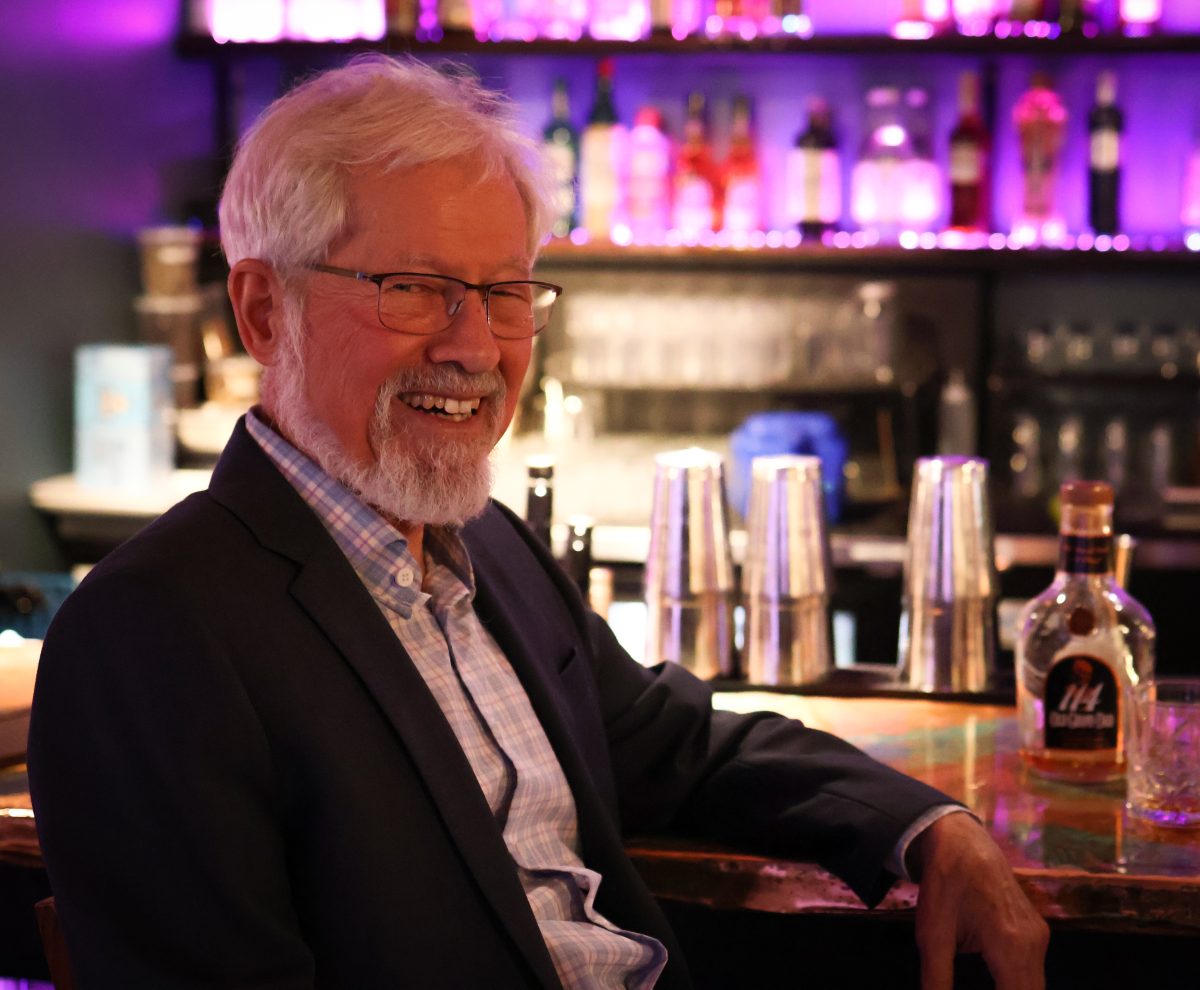
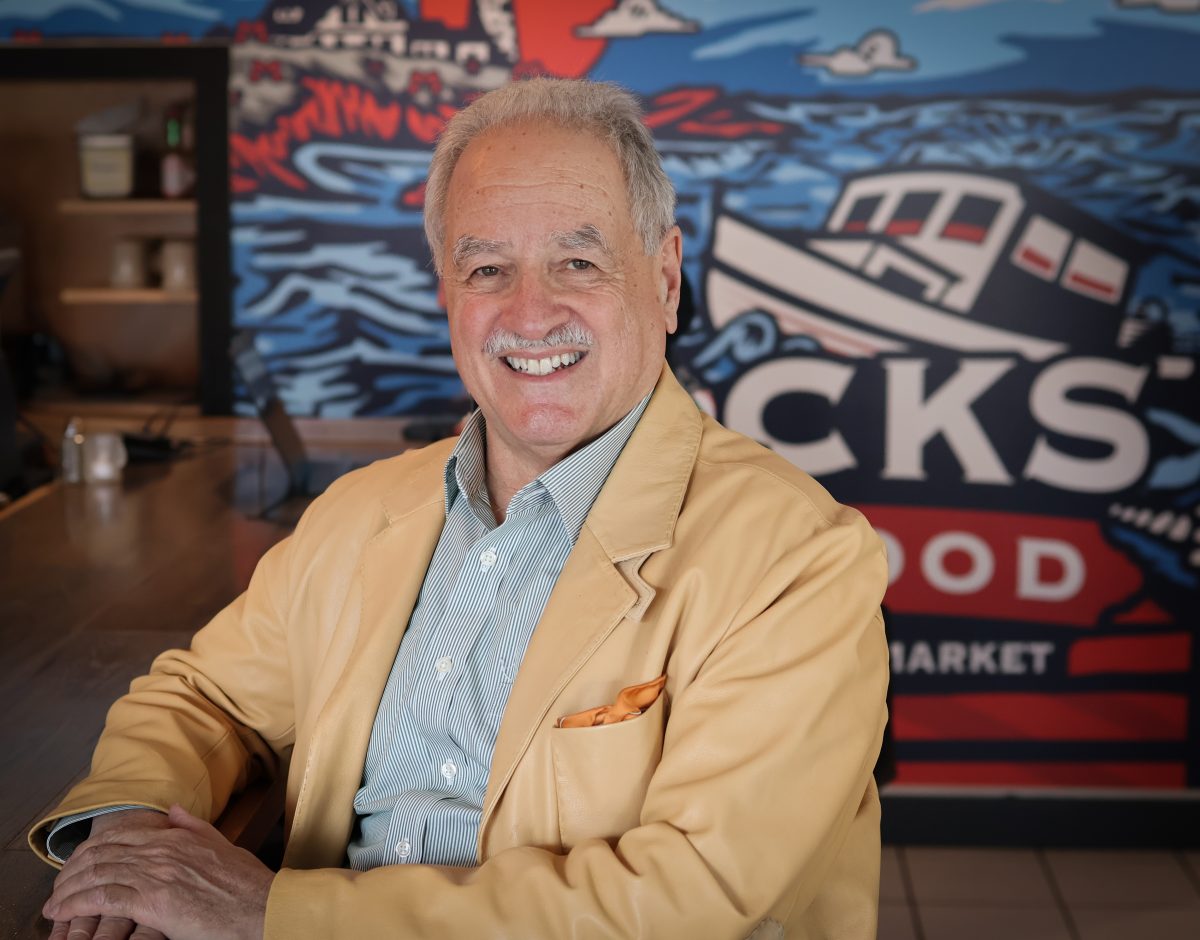
Since taking ownership in 2019, Sheila and Chris Mills have focused on building up the bar program and making Docks a fun place to hang out year-round. There’s live music on the patio, oyster specials and seasonal cocktails. If you stop in, there’s a good chance you’ll find Jonathan Goode at the modest wooden bar.
How long have you been coming to Docks?
I’ve been coming to Docks for about sixteen years. Chris and Sheila Mills, the current owners, are very attentive to the food and customers. The food’s nice, the people are nice. I live up the street about half a mile or so. On Sundays I come in for the oyster special, and they have a good beer selection.
You did some police work right out of college. What was that like?
I got a BA in English literature from USM, but I had a lot of extra credit, so I took criminal justice, too. I joined the Old Orchard Beach Police Department for a couple summers. The drunks would be loud and yelling, screaming, calling me bad names and swearing. One of the other officers would say to them, “Well, the department chaplain wants to talk to you.” That’d be me. I found this whole chaplain jacket out back — a double-breasted with brass buttons — hanging in the closet. I put it on, walked in with the Bible, and I said, “Well, let’s pray for your souls, my sons.” … I’d say, “Let’s talk,” then I’d read a couple passages and they’d quiet right down. It worked out pretty well.
How did you make the transition from police officer to pilot?
I was a police officer in Old Orchard from ’72 to ’74, and then I joined the South Portland Police Department for a year, and then from there to the sheriff’s office. I became a sergeant and then was sent on a tour over in London with Scotland Yard. I was flying prisoners around on an airplane, found that was more fun, and got my pilot’s license. I went to the Red Cross for a couple years and then was a corporate pilot for the airlines. I did that for twenty-four years, then twenty-seven with the Federal Aviation Administration as an inspector of accidents, investigations, safety, analysis, things of that sort. I just retired two years ago after twenty-seven years and eleven months, but who’s counting?
Tell us about your work as a commercial pilot.
I worked for Pan Am as a pilot. I moved to Berlin in June of ’88 and, of course, in ’89 the Wall came down. I brought back a hundred feet of sculpture from the wall. Pan Am shipped it back for me. It languishes in my garage now, but the Maine Military Museum wants it.
Pan Am shut down in ’91, so I came back and worked for Trans World out of New York for a while, and when they shut down, I came back to Maine. I was working as the director of operations of Northeast Airlines, which is here in Portland, then my National Guard unit got mobilized off to Bosnia, came back a year later and kept on working, and then from there to Washington, D.C., to join a special team on safety analysis and investigations.
What was your experience in Bosnia like?
Bosnia was interesting. I was flying Black Hawks doing medevac in the Army. One night we’re going up the side of a hill at night to do a medevac. We wore night vision goggles, which amplify light ten thousand times. You can see through clouds and rain and snow, and we’re going in wintertime. It was snowing hard. I’m looking up the side of the hill, and I couldn’t see the top of the hill through the clouds. Then my door came open, the guy to the left of me lost his goggles. He couldn’t see. We couldn’t see over the trees at a hundred and thirty miles an hour. So I said, “Oh, this isn’t good.” It was kind of funny.
Being a war officer in the Army was good. I don’t really get excited unless you screw with my paycheck or try to kill me. My mother used to say to me, years ago, “If you don’t have a fifty percent chance of getting your neck broken, you’re not interested.”
I retired a little over a year and a half ago, and it took a lot of getting used to. I went to Europe recently and there was one thing I wasn’t able to do. I couldn’t find this girl. When I was in Bosnia, this little girl, whose father had been killed in the war, clung onto me all day. She wore my hat and followed me around. She must be twenty-eight or twenty-nine now, but I should have gone back and tried to find her.
What have you been up to since retiring?
I’ve been an NRA pistol instructor for forty-eight years. So now I teach at the Spurwink Rod and Gun Club in Cape Elizabeth. I do some personal training, and I teach a lot of women’s courses. The biggest course the NRA has right now is the Women On Target course. They come in and they are such good students. They’re detail-oriented. They pay attention. We learn how to shoot and, first of all, how to be safe, what the laws are in Maine and what your responsibilities are, and we have a great time shooting.
Last fall, I took a trip to Stockholm and saw this doctor who was on my helicopter in Bosnia. From there I flew down to Munich for Oktoberfest. Spent a week sitting in the sun, drinking beer, eating good food and singing songs, sometimes with the bands and sometimes without. From there, I rented a Jag F-type and did the Italian Alps, going a hundred miles an hour. There’s no speed limit in some places. My advice would be to stay in the left lane and don’t slow down or you’ll get run over!
Know an interesting bar regular? Send them our way at theregularsmaine@gmail.com.