photo/Jessie Banhazl
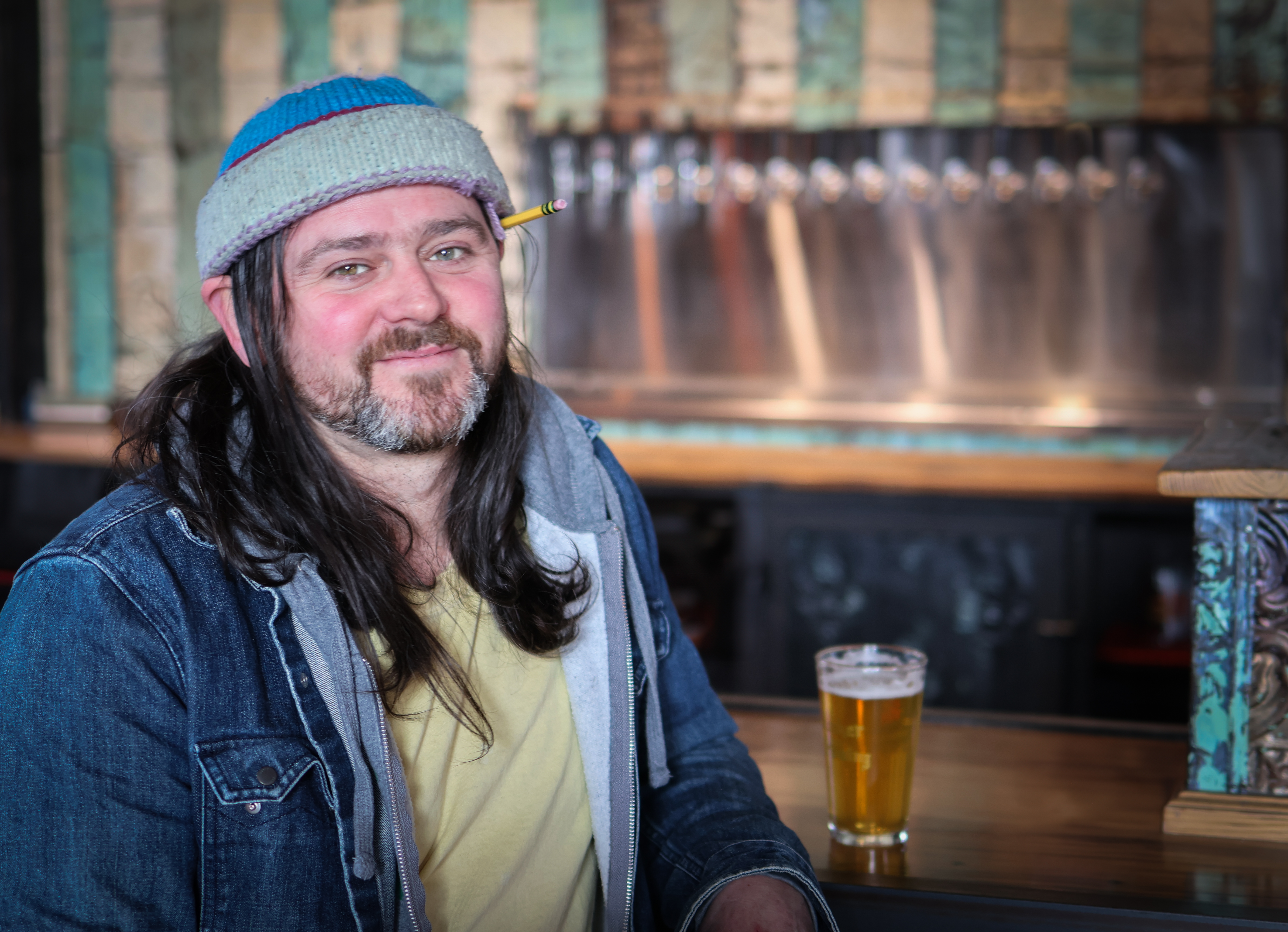
Brendan Ferri
Age: 42
Hometown: Warren, R.I.
Bar of Choice: Bunker Brewing Company
Profession: Designer/Carpenter
Regular Since: 2016
Drink of Choice: Bunktoberfest
It’s no surprise that Brendan Ferri feels right at home at Portland’s Bunker Brewing Company tasting room. He built the place.
Located in back of an industrial building in Libbytown a stone’s throw from the Cumberland County Jail, Bunker is an unpretentious, low-key garage space where you can relax with a crisp pilsner and munch popcorn. Patrons sit inside and out at long tables. You’ll see plenty of dogs and little kids, along with local regulars and beer-curious tourists just passing through. It’s as humble and chill as the man who made it.
When did you move to Portland?
I moved here in 2000 right out of high school to go to Maine College of Art & Design and study sculpture. I worked mostly with metal, but also did printmaking, welding, blacksmithing and bronze-casting. I did abstract, figurative sculpture, some installation work, and a lot of playing with perspective. Now I do custom carpentry jobs for mostly restaurants and retail stores. Besides carpentry, I put my creative energy into drawings and woodworking.
What made you stay in Portland?
I got a great job working with [Portland-based artist] Aaron T Stephan, and I also worked for another artist, Katherine Porter, as her assistant. She was an abstract painter. I had a great community of artists that were making things here. There was a studio space across from SPACE Gallery that was full of people. It was a vibrant arts community after college. I think that’s when I met [co-owner] Chresten Sorensen from Bunker. He was a baker at Sonny’s. I knew a lot of people there and at Local 188, too, who were musicians and artists that worked in those restaurants. That was a great environment. A lot of people made it here and could continue to stay, but there are a lot of great artists who moved away, who couldn’t afford it. Their studios disappeared, or they couldn’t find industrial spaces to work in anymore.
How did you go from art student to carpenter?
I got really lucky. I went into Rogues Gallery clothing store years ago to get a screen-printing job. I knew people who worked there, and the owner saw my résumé and he said, “You can build stuff, right? Could you build us a store?” And I said, “Yeah, I can do that.” I was fueled by anxiety and figured out how to do it. I built this hangman’s gallows that they could hang their t-shirts on. That was my first project for a retail store. Then I built a store for them on Cape Cod, then I built some sets for the L.L.Bean catalog that they could use for photos.
Do you have a favorite project that you’ve worked on?
The Papi restaurant build-out. I had a lot of creative control. I did the plaster walls, all the furniture, all the cabinetry, trim work. Not the door, though, thankfully.* That was a fun one and it took about a year. The Miranda Group is a big client, but I’ve also done work for Crispy Gai, Anoche, Off Track Pizza, and I built this place, which was modeled after an old bunker. We’d have a party late into the night and break up pallets and cinder blocks and burn all the wood to make the trimming.
What do you like about Bunker?
I’ve been friends with Chresten Sorensen since before it opened, so it’s like a family place for me. Once the garage doors open in summer, it’s sunny. It’s out of the way. It’s not pretentious, and I like pilsners and lagers, which is what they specialize in.
What are you working on now?
I’m building booths for the back room at Via Vecchia. They’re going to be upholstered and brass-trimmed. I’m psyched about those. I’m also working with Erika [Colby] from Anoche, who is opening a cannery in Topsham. It’s like the first cannery to open in a hundred years, I think, possibly, in the state. It’s going to be pretty cool.
*In a controversial 2023 decision, city officials ordered Papi, the Puerto Rican restaurant on Exchange Street, to replace its hand-carved mahogany doors on grounds that they didn’t meet historic-preservation standards.