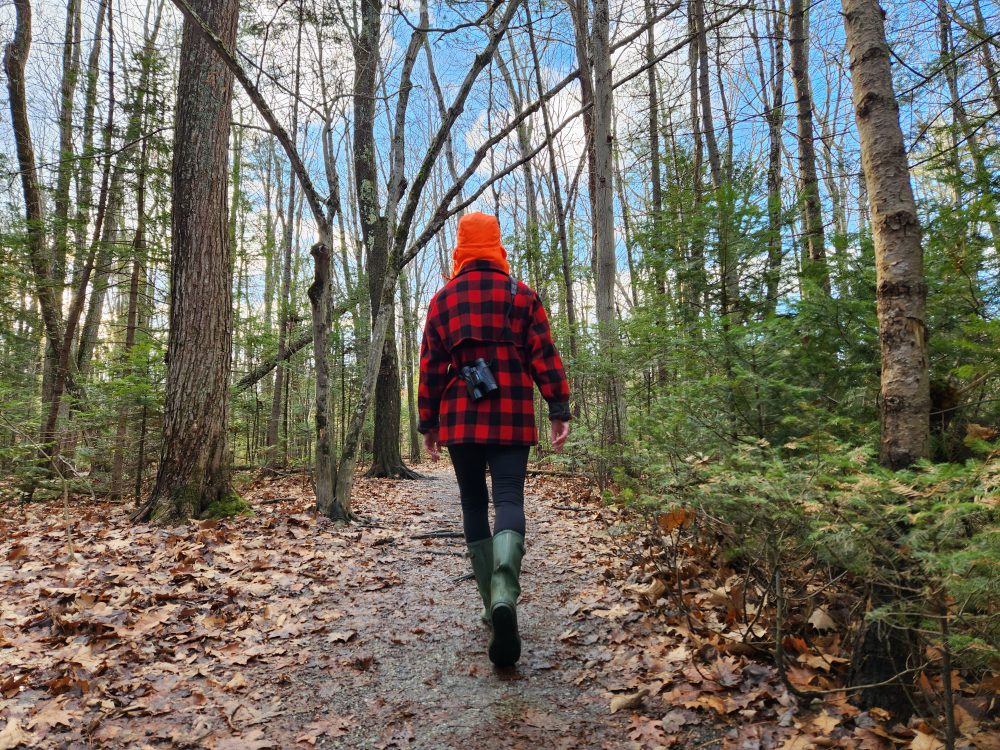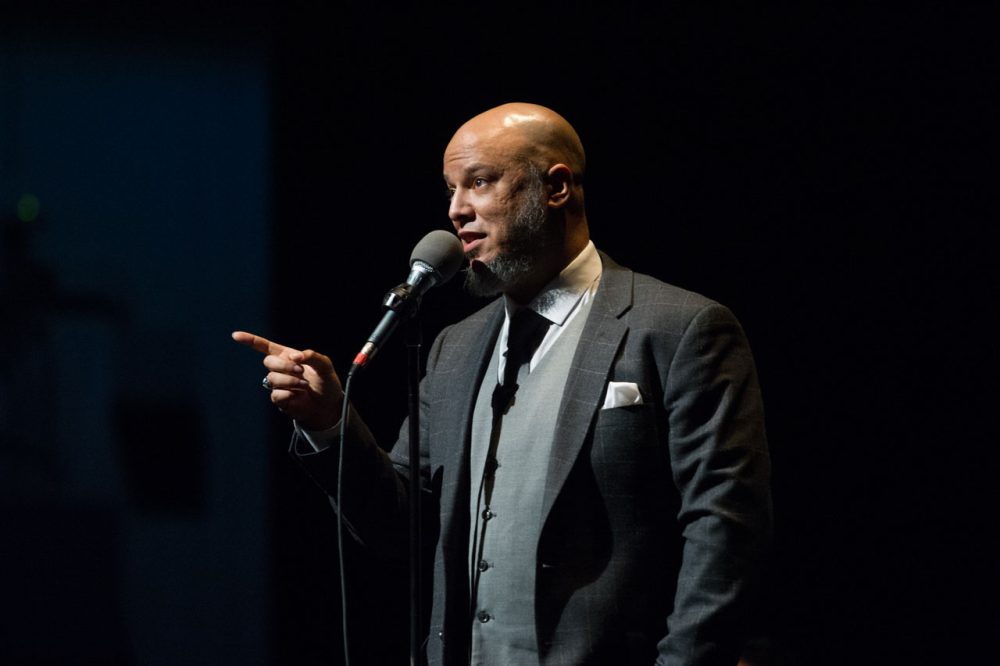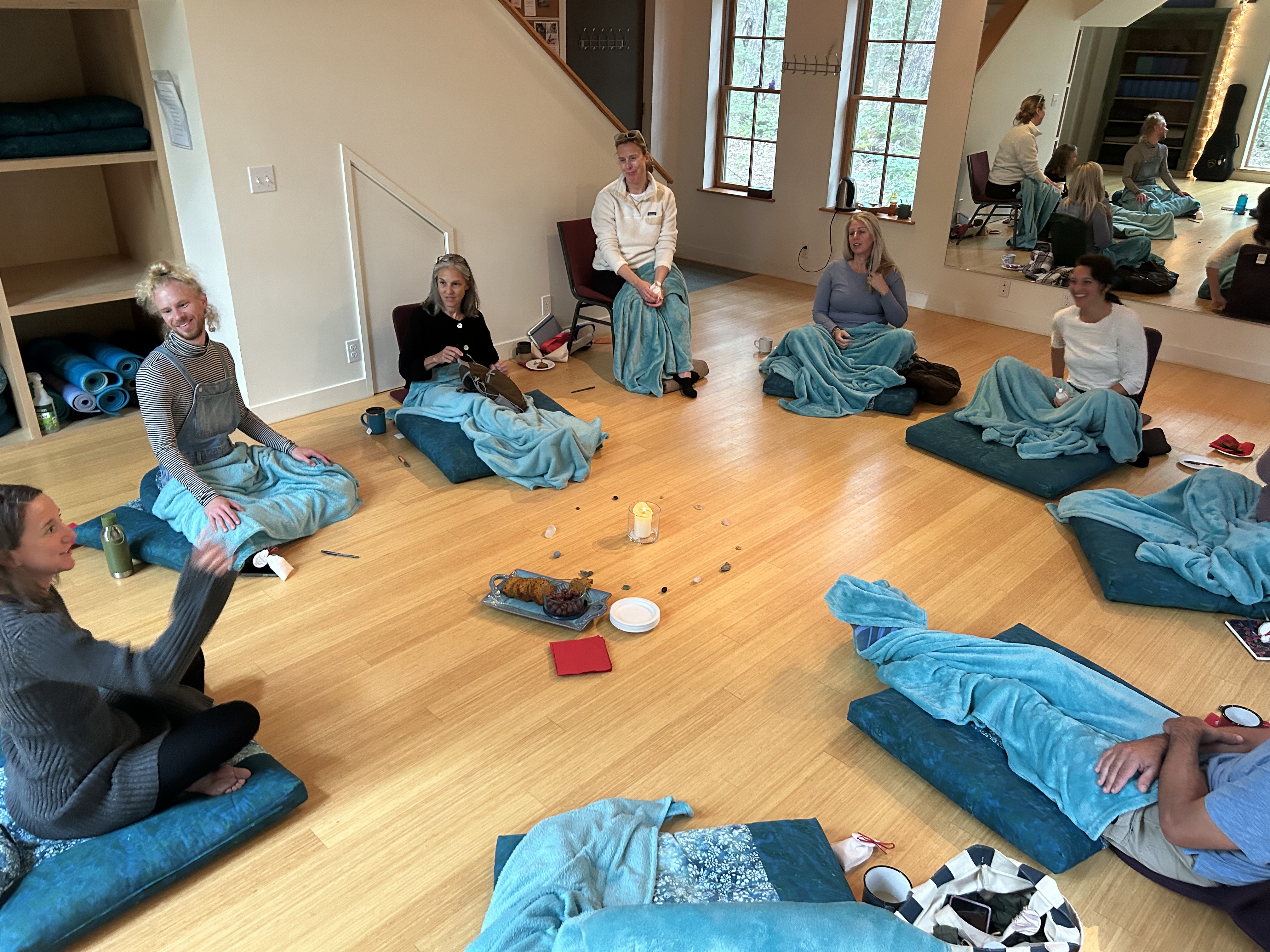
A recent Revive Gathering. photos/courtesy Julia Maslen
Overcoming the loneliness epidemic in Maine
Recently, while shopping at Shaw’s in Falmouth, I was struck by the self-checkout stations that replaced some of the traditional cashier lanes. I felt sad as I reflected on the reality that we are slowly disconnecting from even the simplest human interactions, like a pleasant chat while we buy our groceries. What once was an opportunity for social exchange is now a solitary task on a screen.
We are in the midst of a loneliness epidemic. The U.S. Surgeon General, Dr. Vivek Murthy, declared this in 2023, and here in Maine we are not immune. Many of us are feeling lonely, whether we acknowledge it or not.
If loneliness is so widespread, why aren’t we talking about it more openly? And what are we actually doing about it? We must change our behaviors and the structure of our communities to address this epidemic.
I believe Mainers can lead the way. Let’s be the first state to confront the loneliness epidemic head-on. We need to work against the inertia of isolation and revive in-person connections. I’m spearheading an effort to do this, and it’s been a lonely endeavor so far. I can’t create a community alone. I need you. We need each other.
Loneliness is universal, yet we often feel ashamed of it. Talking about loneliness is not just healing, it’s transformative. Understanding its complexities is the first step toward overcoming it.
Yes, external factors like screen time, the COVID pandemic, and the loss of gathering spaces have contributed to the isolation we feel. Yet I believe the root cause of loneliness is deeper; and it’s not just one thing, it’s many. But while solitude can be painful, it can also be a powerful catalyst for self-awareness and growth.
For much of my life I wondered what I was missing. I wondered why everyone else seemed to have figured something out that I hadn’t. I questioned what was wrong with me.
But in mid-life, I’ve come to realize nothing was wrong with me. I am imperfectly human, and I’ve learned to embrace my quirks and uniqueness. While I may be a societal outlier, I’m finding greater peace with this and I live according to my own values. Loneliness has been part of my journey and probably always will be to some extent. Perhaps I cannot “fix” it, but I’m learning to embrace it.
To better understand other perspectives on loneliness, I interviewed five Maine residents. Their stories, though varied, highlighted common themes: the impact of social media, the decline of so-called third places, and the fear of reaching out rooted in our culture’s fierce individualism.
But again, I believe there’s a deeper, often overlooked cause. We may be lonely because we’re disconnected from ourselves. We long for communion with others, but first we must know who we truly are and what we want from these relationships.
To overcome loneliness, we have to stop hiding behind masks and practice being real, showing up authentically both for ourselves and those around us. Once we know our own truth, we can rebuild community connections and ultimately end the loneliness epidemic.
Virtual Connection vs. Real Connection
Gen Z, the most technologically integrated generation, is also the loneliest, a striking paradox that speaks volumes about the impact of technology on community.
Lynn Bubley, a retired nurse from Eliot, recalled the childhood joy sparked every time the phone rang at home. “I used to love it when the phone rang and everyone would run for the phone,” she said. “Now we all have our cell phones. Everyone has their phone or their tablet; it’s like cocaine. There’s no real connection.”
In a Substack post published last March, “It’s Obviously the Phones,” writer and culture critic Magdalene J. Taylor points to the steep decrease in sociability that followed the widespread adoption of smart phones in 2008 — a drop unlike that which followed the introduction of other isolating media technologies.
“In 1950, the typical American household already watched four and a half hours of TV per day,” Taylor noted. “People have been consuming copious quantities of media for decades now, but it wasn’t until the smart phone, a device we carry with us at nearly every moment, that we began to be so alone. Neither books nor television simulate socialization in the way our phones do.”
Sue St.Pierre, an AI consultant and physician educator from Portland, shared her experience as a medical professional with a smart phone. “As a doctor who used to be on call for forty-eight hours in a row, I can tell you that constant availability is not good for your nervous system. There’s this illusion of being always available, but it creates a false sense of connection that blinds us to the fact that we’re actually more isolated than ever. We’re so lonely we can barely breathe.”
Alan Fernald, formerly of Portland, described the “false sense of abundance” we feel with online connections. “Social media gives us the opportunity to experience a lot of parasocial relationships,” he said. “We see someone’s photos and we sort of feel like we’ve caught up with them, but in reality it’s not a connection.”
Diversity advocate Julie Alexandrin, of Scarborough, observed how social media’s echo chambers reinforce division. “With technology I can … get all this confirmation bias about how my views are right and how yours are wrong and how you are not as important as I am,” she said. “I think we need to go back to explore: what does it mean to be human?”
COVID and Social Anxiety
In 2020, we were told to isolate ourselves and that doing so was a matter of life or death. Five years later, it’s clear that post-COVID trauma is closely tied to the loneliness epidemic. But in our rush to move on, we’ve neglected to fully address this cause.
“As a society, there has been a lack of recognition around the trauma and around the fear, the anxiety, the panic, that so many people felt,” said Fernald.
I’ve been working hard to bring small groups together in person, and it’s been surprisingly difficult. Many people have confided to me that they’re struggling with social anxiety after having to avoid in-person gatherings for so long. The lingering fear of intimate group spaces is real.
“COVID really shifted something,” St. Pierre said. “I still feel there is a reluctance to gather. Everything is on Zoom.”
“We’ve retreated back into ourselves in some way,” she added. “It’s almost like people aren’t skilled to have conversations. … We have access to so much, yet our ability to access ourselves and each other is a lost art.”
“What’s the way back?” St. Pierre pondered. “The way we change culture is to change behavior. We actually have to do something different.”
Third Places
In Maine and across the nation, the popularity of third places — social gathering spaces that aren’t work or home — has been waning for decades, but that’s where communities are made. And those of us working from home often not only need a third place to form social bonds, we need a second place.
Ethan Chanterelle, a lifelong Mainer who’s traveled extensively in South America and China, said, “In China at night, you walk outside and there are always community activities, like dance, aerobics, badminton, chess, tea drinking, etcetera. There are lots of opportunities to connect with others.”
“I don’t think we realize how often we subtly close ourselves off from others,” said Chanterelle, who gave the example of wearing ear buds while walking down the street. “We’re training ourselves not to pay attention to the outside world. We limit the novelty we experience.”
“Other cultures create community to survive. We’ve whittled our families down,” observed Alexandrin. “Just three generations ago, we lived and worked together. I think if you look at other cultures, they are living much more inter-generationally than we are, and I think that makes a huge difference.”
Few of us can rely on extended families for support these days. Could it be time to build new “chosen families,” networks of kin-deep connections that uplift us and help us thrive?
My mission is to create places in Maine communities that foster real relationships, where wehonor both our individuality and shared humanity. This isn’t about casual chit-chat or consuming things together; it’s about intentional, unfiltered connection.
Since last August, I’ve been renting a community studio space in Falmouth where I host Revive Gatherings, events facilitated to foster intimate conversations and friendships. This practice helped me understand that before we can really know others we must first know who we really are.

Can we be lonely for ourselves?
What I find interesting about my history of loneliness is that I’ve always had plenty of people in my life. I now recognize that I wasn’t in tune with myself when I was with others. I felt lonely even when surrounded by “friends.” Trying to connect from a place of inner disconnection is futile.
How often do we disassociate from ourselves? Through alcohol, drugs, scrolling, junk food, relationship-hopping… I’d say it’s a daily exercise for most people. As a therapist, I’ve seen countless people struggle with this problem. And unlike smart phones, it’s nothing new. “All of humanity’s problems stem from man’s inability to sit quietly in a room alone,” the French philosopher Blaise Pascal said four centuries ago.
I believe our greatest fear is being alone with ourselves, and that on the flip side, we can overcome fear and loneliness by knowing and valuing who we truly are. I too used to fear sitting alone, and now I do it regularly for hours or even days.
Ironically, overcoming loneliness begins with being alone with yourself in order to better understand your feelings, beliefs, and sense of purpose. By first addressing our own needs and desires, we free ourselves to have intentional, fulfilling connections with others.
Bubley, the retired nurse, described herself as a “cellophane child” whose needs were invisible to those around her as she grew up. She was never taught to listen to her emotions or trust her body. “If you don’t know yourself, there’s this emptiness inside, a hole in your soul,” she said. “The more you feel that emptiness about not fitting in and feeling different, the more masks you put on because you don’t know who you are.”
And that’s lonely. I can relate, as I used to be a master chameleon, adapting to meet others’ needs while ignoring my own. Deep shame compelled me to prioritize their wants over mine. Always thinking something was deeply wrong with me, I hid in my relationships. I hid from myself.
Practical Steps
Here are some practices I’ve found helpful on my path to self-knowledge and genuine connection with others.
Do a daily feelings check-in
Take two minutes each day just to breathe and notice how you’re feeling. How does your body feel? This simple moment of self-connection can help you become more aware during the rest of the day.
Greet others with your full presence
Next time you’re out and about, take a moment to look someone in the eyes and say hello. This small, everyday gesture is a simple but powerful moment of connection that’s falling out of fashion in our transactional world.
I remember the day last summer when I greeted a homeless man in the parking lot of the grocery store. I smiled and made eye contact. He did a double take, and I could tell that was because he wasn’t used to being seen. We stopped and talked for a few minutes.
How often do we look past or through people, rather than at them? Are we so “busy” listening to podcasts about self-improvement that we forget to greet our neighbor and ask them how they’re doing today?
Notice your screen time
Pay attention to how often you’re scrolling on your phone. How does it make you feel? No judgment, just notice. This simple awareness can help you reconnect with the present moment and your surroundings.
Try something new
Challenge yourself to attend at least one in-person event this month. Whether it’s a class, a group activity or an informal gathering, give yourself the opportunity to work through any anxieties and experience face-to-face connection again. Remember: everyone else is there to meet and talk with people too.
“You’ve got to know yourself. You are worthy of knowing yourself,” Bubley said. “You are a human being. You’re a soul. You’re complex. You’ve got emotions. You’ve got feelings and it is all OK. Don’t let anyone ever tell you that you’ve done something wrong or that you don’t look or act the way you are supposed to. You are perfect just the way you are.”
Over the next several months, I plan to continue researching the ways people in Greater Portland can rebuild our sense of community. Reach out if you’re willing to share your ideas. Together, we can make this happen. We’ll never do it alone.
Julia Maslen is a community builder, therapist, and intuitive healer based in Falmouth who organizes Revive Gatherings (revivegatherings.com). She can be reached at julia@revivegatherings.com.